

Muchas organizaciones solían operar redes separadas para voz, datos, video, megafonía y comunicación operativa. Ese enfoque a menudo resultaba en infraestructura duplicada, gestión desconectada y coordinación limitada entre sistemas.
Una red convergente cambia ese modelo al reunir múltiples servicios en una sola infraestructura gestionada basada en IP. En lugar de tratar la telefonía, el intercomunicador, la megafonía, el video y los datos empresariales como plataformas aisladas, una red convergente les permite operar a través de una arquitectura compartida que es más fácil de gestionar, escalar e integrar.
Para las organizaciones modernas, esto es más que una actualización técnica. Es una forma práctica de reducir los silos de red, mejorar la coordinación de servicios y admitir una gama más amplia de necesidades de comunicación en oficinas, campus, instalaciones industriales, entornos de transporte y otros sitios multiservicio.
Puntos Clave
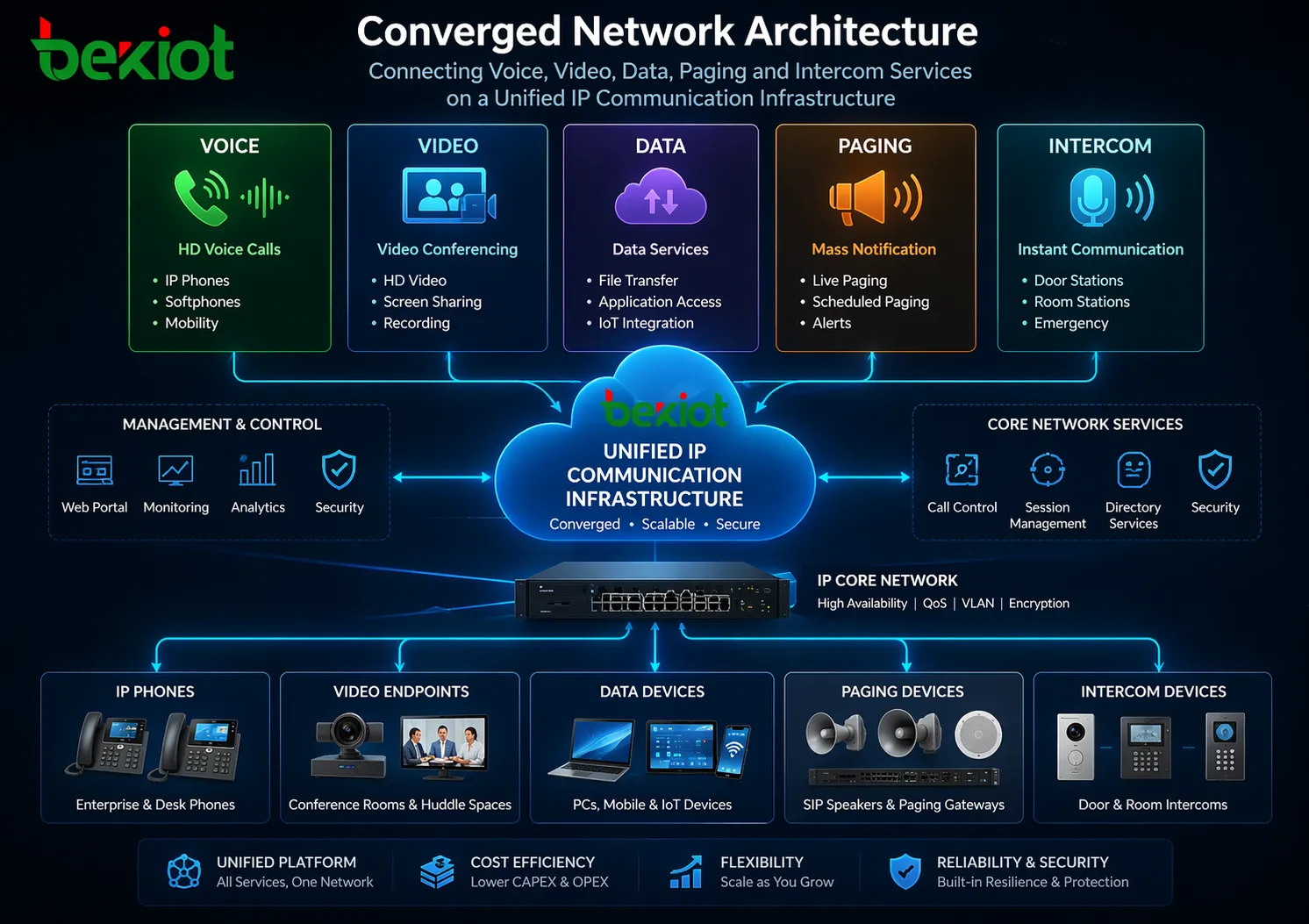
Una red convergente combina múltiples servicios de comunicación y datos en una infraestructura gestionada. Puede reducir la complejidad, mejorar la interoperabilidad, simplificar la expansión y soportar servicios como voz, video, datos, megafonía, intercomunicación y tráfico relacionado con IoT.
Al mismo tiempo, la convergencia también requiere una planificación cuidadosa. La seguridad, la priorización del tráfico, la redundancia, la compatibilidad y el riesgo operativo deben considerarse antes del despliegue. Cuando se diseña adecuadamente, una red convergente se convierte en una base más eficiente y escalable tanto para la comunicación diaria como para las operaciones críticas en el tiempo.
¿Qué es la Convergencia de Red?
La convergencia de red es el proceso de combinar funciones de red separadas en una infraestructura unificada. En términos prácticos, esto significa que servicios que antes se prestaban a través de diferentes plataformas ahora pueden compartir la misma base IP y Ethernet, mientras se gestionan según sus propios requisitos.
En una red convergente, las llamadas de voz, los datos empresariales, las transmisiones de video, el tráfico de megafonía, la comunicación por intercomunicador y otros tipos de servicios viajan a través de un entorno coordinado en lugar de a través de múltiples sistemas independientes. Los servicios siguen siendo distintos en su propósito, pero ya no están aislados en su arquitectura.
Es por eso que una red convergente a menudo se describe como una columna vertebral de comunicación compartida. Proporciona una plataforma estructurada que soporta muchos tipos de tráfico, muchos dispositivos y muchas aplicaciones en el mismo entorno de red.
¿Cómo Funciona una Red Convergente?
Una red convergente normalmente se ejecuta sobre una infraestructura compartida de conmutación, enrutamiento y transporte IP. Dispositivos como teléfonos IP, estaciones de intercomunicación SIP, pasarelas de megafonía, servidores, consolas de operador, puntos finales inalámbricos y aplicaciones empresariales se conectan a la misma base de red gestionada.
La red no trata todos los tipos de tráfico por igual. El tráfico de voz e intercomunicación generalmente necesita baja latencia y entrega predecible. El video a menudo requiere mayor ancho de banda. Las aplicaciones empresariales pueden necesitar un rendimiento estable pero menos sensible al tiempo. Como resultado, las redes convergentes dependen de políticas de QoS, segmentación VLAN, control de acceso, controles de seguridad y planificación de ancho de banda para mantener cada servicio funcionando correctamente.
Cuando estos controles están implementados, una sola infraestructura puede soportar tanto el tráfico de comunicación como el tráfico operativo sin obligar a una organización a mantener múltiples sistemas aislados.
Una red convergente no fusiona todos los servicios en un flujo idéntico. Coloca diferentes servicios en una infraestructura compartida mientras los gestiona según diferentes necesidades de rendimiento, seguridad y operación.
¿Qué Tipos de Datos Puede Transportar una Red Convergente?
Una red convergente puede transportar muchos tipos de tráfico a través de la misma infraestructura. Los ejemplos más comunes incluyen datos de voz, datos de video, datos empresariales, tráfico de intercomunicación, tráfico de megafonía y datos de dispositivos o sensores asociados con sistemas conectados.
En entornos con uso intensivo de comunicación, esto puede incluir llamadas VoIP, señalización SIP, tráfico de megafonía pública, comunicación de puntos de ayuda de emergencia, transmisiones de video en vivo, datos de despacho de operadores e información a nivel de aplicación desde plataformas de control o gestión.
En entornos de red más amplios, el mismo modelo convergente también puede soportar tráfico relacionado con IoT, aplicaciones en la nube, plataformas de servicios digitales y flujos de trabajo operativos que dependen de la coordinación en tiempo real entre dispositivos y usuarios.
Arquitectura Central de una Red Convergente
Capa de Infraestructura
La capa de infraestructura incluye conmutadores, enrutadores, enlaces ascendentes, dispositivos de acceso y recursos de transporte físico que transportan todo el tráfico soportado. En muchos despliegues, esta capa también incluye características de diseño resiliente como rutas redundantes, enlaces ascendentes protegidos o soporte de energía de respaldo.
La alimentación a través de Ethernet a menudo forma parte de esta arquitectura porque permite que dispositivos conectados a la red, como teléfonos IP, estaciones de intercomunicación y otros puntos finales, reciban tanto conectividad como energía a través del mismo cable.
Capa de Control y Servicio
Esta capa incluye las plataformas que gestionan la comunicación y la prestación de servicios. Puede contener plataformas IP PBX, servidores SIP, sistemas de despacho, controladores de megafonía, software de gestión e interfaces de integración para aplicaciones relacionadas.
En proyectos más grandes, esta capa también puede conectarse con sistemas de video, alarmas, control de acceso y otras plataformas operativas para que la comunicación sea parte de un flujo de trabajo del sitio más amplio en lugar de una función independiente.
Capa de Punto Final
La capa de punto final incluye los dispositivos que las personas usan y los dispositivos instalados en el campo. Estos pueden incluir teléfonos de escritorio, terminales de intercomunicación SIP, altavoces de megafonía, teléfonos de emergencia, consolas de operador, pasarelas de voz, clientes móviles y dispositivos de comunicación robustos para entornos industriales.
Aquí es donde la convergencia se vuelve visible en las operaciones diarias. Diferentes dispositivos aún sirven para diferentes propósitos, pero operan a través de un modelo de red coordinado.
¿Cuáles son los Beneficios de una Red Convergente?
Infraestructura Más Simple
Las redes convergentes reducen la necesidad de construir y mantener sistemas de red separados para cada servicio. Esto ayuda a reducir el cableado duplicado, las capas de hardware repetidas y la administración fragmentada.
Para las organizaciones con múltiples necesidades de comunicación, la simplificación por sí sola puede ser una ventaja importante porque crea una estructura operativa más limpia.
Menor Complejidad Operativa
Gestionar varios sistemas separados a menudo significa rutinas de resolución de problemas separadas, rutas de actualización separadas y requisitos de soporte separados. Una red convergente ayuda a reducir esta carga al centralizar más la infraestructura y el marco de políticas.
Esto facilita el mantenimiento a largo plazo y brinda a los equipos de red y comunicación una mejor visibilidad en todo el entorno.
Mejor Interoperabilidad
La voz, la megafonía, el intercomunicador, el despacho y los servicios relacionados pueden funcionar juntos de manera más efectiva cuando comparten una arquitectura común. Esto mejora la coordinación entre los dispositivos de campo, los usuarios, los operadores y las plataformas centrales.
También facilita la integración de servicios que de otro modo permanecerían aislados, especialmente en sitios donde la comunicación debe moverse rápidamente entre departamentos o equipos de respuesta.
Escalabilidad para el Crecimiento
Las redes convergentes facilitan la expansión a nuevos edificios, pisos adicionales, sitios remotos o áreas de cobertura de servicio más grandes. Se pueden agregar nuevos puntos finales y aplicaciones a una estructura existente en lugar de implementarse como sistemas separados cada vez que crecen los requisitos.
Esto respalda una hoja de ruta a largo plazo más práctica y reduce la posibilidad de crear nuevos silos más adelante.
Soporte para Servicios Avanzados
Una infraestructura IP compartida puede soportar mejor servicios avanzados como VoIP, colaboración por video, megafonía IP, intercomunicación SIP, integración de dispositivos conectados y otras funciones de comunicación impulsadas por aplicaciones.
Esto es especialmente útil para organizaciones que necesitan tanto comunicación diaria como flujos de trabajo operativos más estructurados en un sitio amplio o un entorno de múltiples edificios.
¿Cuáles son los Riesgos de una Red Convergente?
Exposición de Seguridad
Cuando más servicios comparten una infraestructura, el número de dispositivos conectados y puntos de acceso a menudo aumenta. Esto puede crear una superficie de ataque más amplia si la segmentación, la autenticación, el monitoreo y el control de acceso no se diseñan adecuadamente.
La convergencia puede mejorar la consistencia de la gestión, pero también requiere una disciplina de seguridad general más sólida.
Complejidad de Diseño Inicial
Aunque una red convergente puede reducir la complejidad a largo plazo, la fase de diseño puede ser más exigente. Se deben planificar cuidadosamente múltiples tipos de tráfico, múltiples plataformas y múltiples prioridades de servicio para evitar conflictos o degradación del servicio.
Esta es una de las razones por las que los despliegues convergentes se benefician de un diseño de red sólido y una planificación de integración desde el principio.
Riesgo de Dependencia Compartida
Cuando varios servicios dependen de la misma infraestructura central, las fallas en un área pueden tener un efecto operativo más amplio si la resiliencia es débil. Una falla de conmutación, un problema de enrutamiento o un problema del servidor pueden afectar varias funciones de comunicación a la vez.
Por lo tanto, la redundancia, la planificación de conmutación por error y las estrategias de respaldo operativo son especialmente importantes en entornos críticos de comunicación.
Restricciones de Compatibilidad y Proveedor
Algunos despliegues convergentes se vuelven demasiado dependientes de una pila de tecnología o ecosistema de proveedor. Esto puede reducir la flexibilidad con el tiempo y dificultar las actualizaciones, reemplazos o integraciones futuras.
Una arquitectura más abierta y basada en estándares puede ayudar a reducir este riesgo.
Requisitos de Cumplimiento y Políticas
Cuando una red transporta más tráfico comercial, de comunicación y operativo, los requisitos de las políticas pueden volverse más complejos. Esto puede ser importante en industrias reguladas o en entornos donde los estándares de seguridad, privacidad o disponibilidad del servicio deben mantenerse cuidadosamente.
Por lo tanto, la convergencia debe planificarse teniendo en cuenta tanto la gobernanza técnica como la operativa.
Una red convergente puede reducir la expansión de la infraestructura, pero debe diseñarse para que la simplicidad a nivel de plataforma no cree riesgos ocultos a nivel operativo.
Red Convergente vs Redes Separadas Tradicionales
Los modelos de red tradicionales a menudo dividen los servicios por tipo de sistema. La voz puede ejecutarse en una plataforma, los datos en otra, la megafonía en otra y el video en otra más. Si bien esto puede funcionar en entornos pequeños o heredados, a menudo conduce a infraestructura duplicada, gestión aislada e interoperabilidad limitada.
Una red convergente mantiene los servicios distintos en función, pero los reúne en una infraestructura gestionada. Esto facilita la coordinación de servicios, la aplicación de políticas consistentes y el soporte de la expansión futura sin reconstruir plataformas separadas cada vez que aparece una nueva necesidad.
Para entornos más grandes, distribuidos o multiservicio, esta diferencia se vuelve cada vez más importante porque el costo operativo de la fragmentación tiende a aumentar con el tiempo.
Casos de Uso del Mundo Real para Redes Convergentes
Entornos Empresariales y de Campus
Los campus de oficinas, las instalaciones educativas y los sitios corporativos a menudo necesitan que la voz, los datos, el acceso inalámbrico, la megafonía y la comunicación interna funcionen juntos. Una red convergente ayuda a soportar estos servicios en una arquitectura estructurada mientras simplifica la gestión entre departamentos y edificios.
Atención Médica e Instalaciones Públicas
Los hospitales, las clínicas y las instalaciones de servicio público a menudo dependen de una comunicación interna rápida, flujos de trabajo de notificación, megafonía y coordinación operativa. Una red convergente ayuda a centralizar estos servicios mientras mantiene el control de prioridad necesario para una comunicación confiable.
Proyectos de Transporte e Infraestructura
Las estaciones, los túneles, los aeropuertos y los entornos de servicios públicos generalmente incluyen puntos finales distribuidos, comunicación de cara al público y flujos de trabajo de respuesta gestionados por el operador. Una red convergente ayuda a conectar estos elementos a través de una columna vertebral de comunicación más unificada.
Sitios Industriales y de Alta Fiabilidad
Las fábricas, los puertos, las minas, las instalaciones de procesamiento y los sitios de energía a menudo requieren comunicación entre las salas de control, los dispositivos de campo, los equipos de mantenimiento y los puntos de emergencia. En estos entornos, una red convergente puede soportar telefonía industrial, intercomunicación SIP, megafonía, acceso a pasarelas y comunicación de despacho a través de una estructura gestionada.
Cómo Becke Telcom Apoya Proyectos de Red Convergente
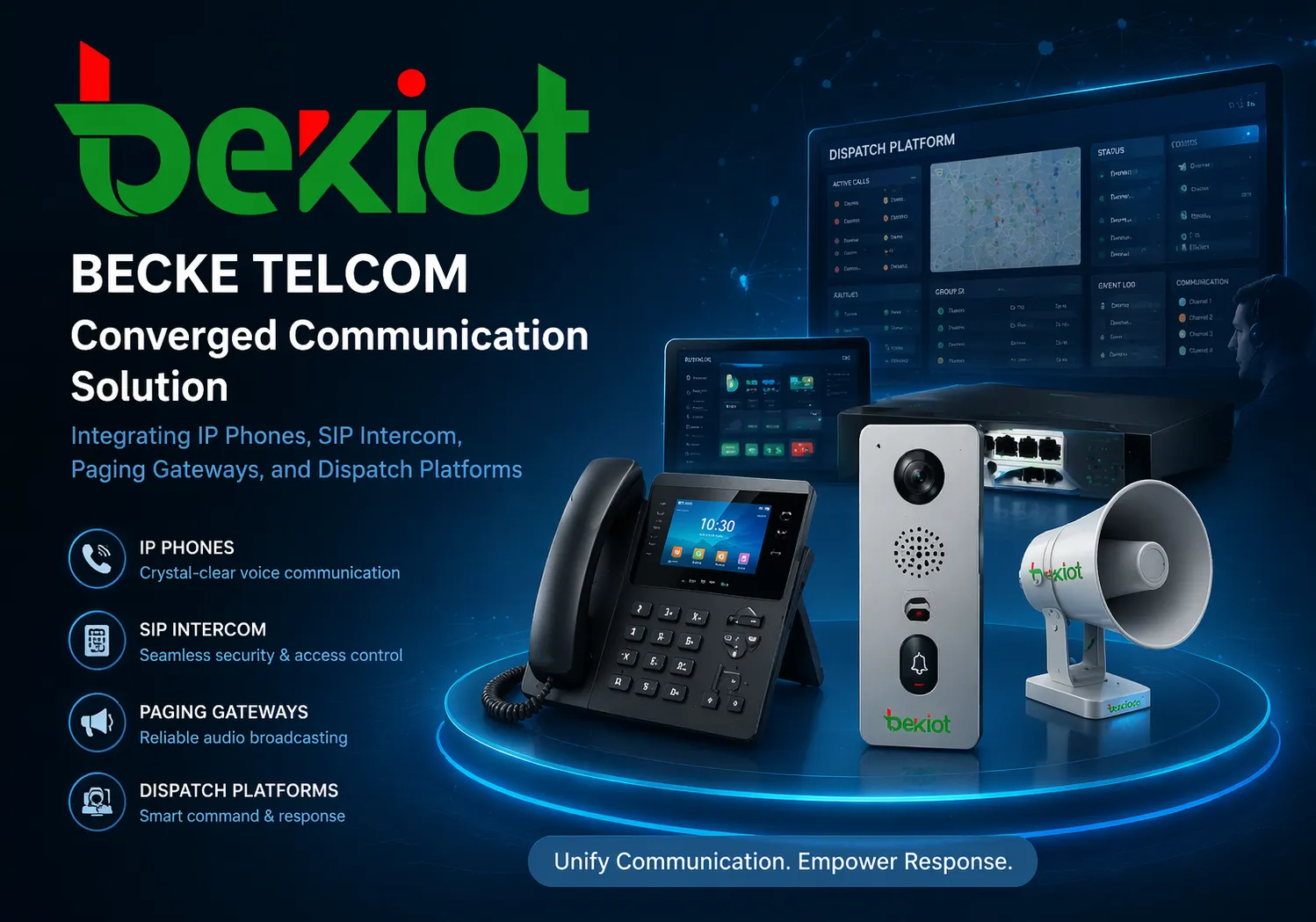
Becke Telcom apoya proyectos de red convergente con soluciones de comunicación integradas que combinan telefonía IP, intercomunicación SIP, sistemas de megafonía, terminales de comunicación de emergencia, pasarelas de voz y plataformas de despacho en una arquitectura IP coordinada.
Esto ayuda a las organizaciones a reducir la fragmentación entre los sistemas de comunicación mientras mejoran la visibilidad operativa en edificios, áreas de producción, espacios públicos y sitios remotos. También respalda un camino más práctico hacia la comunicación centralizada tanto para operaciones rutinarias como para flujos de trabajo de respuesta a emergencias.
Para instalaciones industriales, proyectos de transporte, campus, entornos de atención médica y otros sitios de comunicación crítica, Becke Telcom puede soportar un modelo de comunicación más unificado construido sobre una infraestructura IP compartida.
Conclusión
Una red convergente es un modelo de infraestructura compartida que soporta múltiples servicios de comunicación y datos en una plataforma gestionada. Puede simplificar las operaciones, mejorar la interoperabilidad, reducir la duplicación de infraestructura y proporcionar una base más sólida para la comunicación en tiempo real en diferentes entornos.
Al mismo tiempo, la convergencia debe planificarse cuidadosamente. La seguridad, la calidad del servicio, la compatibilidad, la resiliencia y la flexibilidad a largo plazo son importantes. Para las organizaciones que necesitan voz, video, datos, megafonía, intercomunicación y comunicación operativa unificada, una red convergente bien diseñada ofrece un camino más escalable y coordinado hacia adelante. Becke Telcom apoya esta dirección con soluciones de comunicación integradas diseñadas para operaciones diarias confiables y escenarios de respuesta estructurada.
Preguntas Frecuentes
¿Cuál es el propósito principal de una red convergente?
El propósito principal es transportar múltiples servicios como voz, video, datos, megafonía e intercomunicación a través de una infraestructura gestionada en lugar de mantener redes separadas para cada función.
¿Qué tipos de tráfico puede soportar una red convergente?
Puede soportar tráfico de voz, tráfico de video, datos empresariales, megafonía, comunicación por intercomunicación, tráfico relacionado con IoT y datos de plataformas operativas según el diseño del sistema.
¿Cuál es el mayor beneficio de la convergencia de red?
Para muchas organizaciones, el mayor beneficio es la reducción de los silos de infraestructura. Esto facilita la gestión, mejora la interoperabilidad y admite una expansión a largo plazo más simple.
¿Cuál es el principal riesgo de una red convergente?
Uno de los principales riesgos es que más servicios dependan de la misma infraestructura central. Sin la seguridad, segmentación y redundancia adecuadas, las fallas o vulnerabilidades pueden tener un impacto más amplio.
¿Cómo puede ayudar Becke Telcom con el despliegue de comunicación convergente?
Becke Telcom puede ayudar integrando teléfonos IP, intercomunicadores SIP, sistemas de megafonía, puntos finales de comunicación de emergencia, pasarelas de voz y plataformas de despacho en una solución de comunicación basada en IP coordinada.