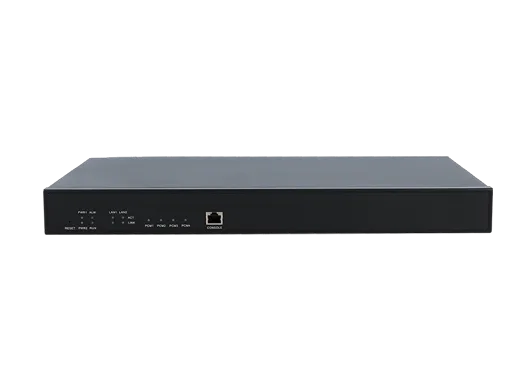

La pasarela de troncal Becke IPGA-2E1 está diseñada para organizaciones que necesitan una conectividad de troncal digital 2E1 fiable en entornos de voz profesionales. Es ideal para integrar el acceso de telecomunicaciones tradicional con las comunicaciones basadas en SIP, ayudando a las empresas a construir una arquitectura de voz más flexible, escalable y manejable para la interconexión de IP PBX, operaciones con gran volumen de llamadas y despliegues en múltiples sedes. Para las empresas que quieren preservar el valor de los recursos E1 existentes al tiempo que avanzan hacia las comunicaciones IP modernas, la IPGA-2E1 ofrece un puente práctico y fácil de implementar entre la infraestructura heredada y las plataformas SIP actuales.
En muchos proyectos empresariales, los sistemas de comunicación no evolucionan de forma inmediata. Las troncales digitales, el acceso E1 por parte del operador, los recursos internos de PBX y los sistemas más nuevos basados en SIP suelen necesitar funcionar conjuntamente durante la expansión o modernización. La IPGA-2E1 está concebida para este tipo de entorno. Ayuda a las empresas a simplificar la interconexión, mejorar la flexibilidad del enrutamiento y crear una red de voz más unificada sin requerir la sustitución completa de los activos de telecomunicaciones existentes.
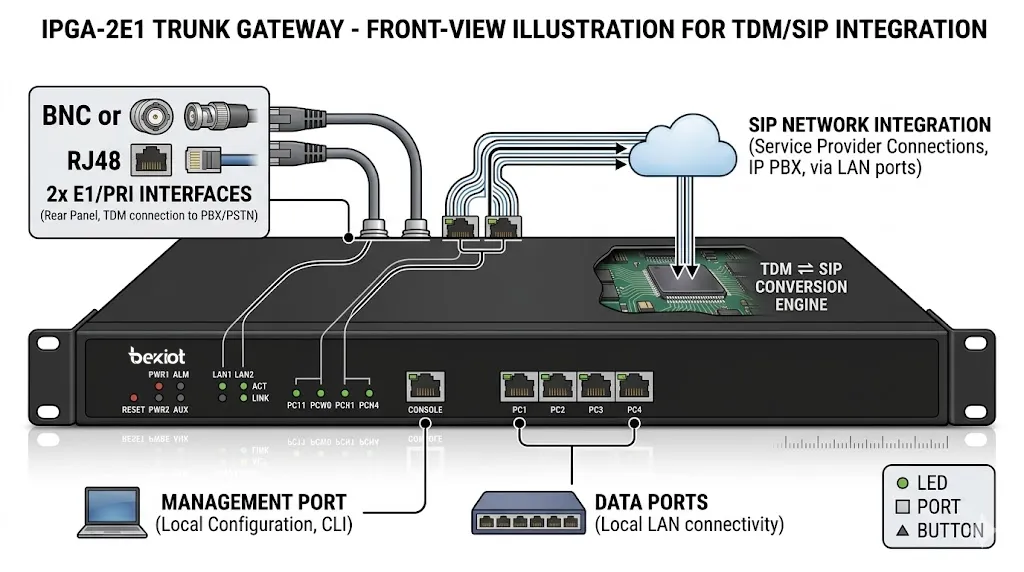
La IPGA-2E1 está orientada a entornos empresariales que necesitan mayor capacidad de troncal digital que los despliegues básicos. Con acceso 2E1, es una opción práctica para organizaciones que quieren mayor disponibilidad de troncal para las comunicaciones diarias, flujos de trabajo de atención al cliente, colaboración departamental y expansión de sistemas de voz empresariales. Esta capacidad adicional la hace más adecuada para instalaciones donde el manejo estable de llamadas concurrentes y la utilización fiable de la troncal son esenciales para la continuidad operativa.
En comparación con configuraciones de pasarelas de menor capacidad, una plataforma 2E1 ofrece mayor margen de crecimiento y puede soportar mejor entornos con gran intensidad de comunicación. Ya sea el proyecto una expansión de sucursales, un sistema de voz de oficina más amplio o actividad de llamadas relacionada con servicios, la IPGA-2E1 ofrece una base más sólida para un despliegue profesional.
Esta pasarela proporciona un puente sólido entre los recursos de troncal digital existentes y las plataformas de comunicaciones modernas basadas en SIP. Ayuda a las empresas a mantener en servicio la valiosa infraestructura de voz al tiempo que introduce un control más centralizado, políticas de enrutamiento flexibles y una integración más sencilla con sistemas basados en IP. En lugar de forzar una migración disruptiva, favorece una vía de transición más controlada y rentable.
Para muchas organizaciones, la modernización de voz no se trata simplemente de sustituir hardware. También se trata de mejorar la manejabilidad, soportar la expansión futura y alinear la conectividad heredada con estrategias de comunicación empresarial más nuevas. La IPGA-2E1 apoya este objetivo al crear una capa de interfuncionamiento fiable entre el acceso de telecomunicaciones tradicional y los entornos SIP.
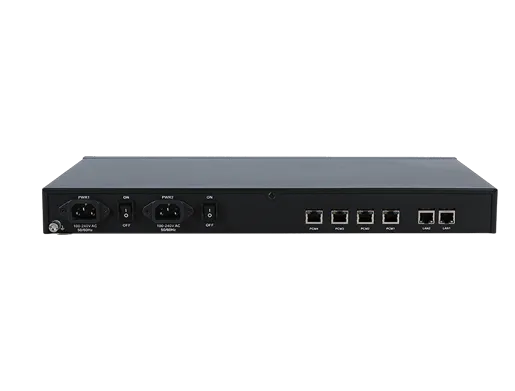
Con su formato de montaje en bastidor, sistema operativo embebido y plataforma hardware diseñada para un funcionamiento estable, la IPGA-2E1 es adecuada para clientes que necesitan una pasarela de troncal profesional para uso empresarial continuo, en lugar de un simple dispositivo de conectividad. Su posicionamiento de producto está claramente orientado a proyectos de nivel empresarial y de integradores, donde importan la estabilidad del despliegue y el valor de servicio a largo plazo.
Esto la convierte en una opción adecuada para salas de equipos, armarios de comunicación y entornos IT empresariales estructurados, donde se espera un funcionamiento fiable y una instalación estandarizada. Para los clientes que construyen una plataforma de voz a largo plazo, la pasarela ofrece un perfil de despliegue más profesional que los dispositivos básicos de conversión.
La fortaleza de una pasarela de troncal 2E1 no radica solo en la capacidad, sino en lo eficaz que soporta la interconexión empresarial estable, la flexibilidad de enrutamiento y la evolución del sistema de voz a largo plazo.
La IPGA-2E1 soporta el enrutamiento de llamadas entre redes de troncal tradicionales y plataformas IP, permitiendo a las organizaciones dirigir las llamadas según su propia estructura operativa. También admite la manipulación de números, incluida la eliminación de dígitos y la adición de prefijos o sufijos, lo que ayuda a adaptarse de forma más eficiente a los planes de numeración empresariales, las reglas de marcado de sucursales y los requisitos del operador.
Esto es especialmente útil en proyectos donde deben coordinarse múltiples sedes, planes de extensiones internos o estrategias mixtas de llamadas salientes y entrantes. Al soportar el procesamiento adaptable de números y la coincidencia de rutas, la pasarela ayuda a reducir los roces de integración y mejora la flexibilidad de despliegue en diferentes escenarios empresariales.
La pasarela es compatible con SIP V1.0 y V2.0 basados en RFC3261, junto con opciones de señalización de troncal digital como la señalización relacionada con SS7, modos de lado de usuario y de red ISDN, y soporte de señalización SS1. Esto facilita su despliegue en entornos donde los sistemas de telecomunicaciones heredados y las plataformas SIP modernas deben trabajar juntos sin complejidad innecesaria.
La compatibilidad es un factor clave en la selección real de pasarelas. Las empresas y los integradores de sistemas suelen necesitar un producto que pueda adaptarse a diferentes condiciones de red, entornos de telecomunicaciones y arquitecturas de PBX. La IPGA-2E1 resuelve esta necesidad al proporcionar una base de interoperabilidad más amplia, ayudando a reducir los riesgos de compatibilidad durante el despliegue y la expansión futura.
La plataforma es compatible con múltiples códecs convencionales, entre ellos G.711A, G.711U, G.729, G.722, G.723, iLBC, AMR-NB, SILK y OPUS. También admite varios métodos de manejo de DTMF y cancelación de eco, ayudando a mejorar la compatibilidad multimedia y la calidad de las llamadas entre diferentes sistemas de voz. Estas capacidades son importantes en proyectos donde los dispositivos SIP, las plataformas de PBX y las redes de telecomunicaciones pueden no usar todas las mismas preferencias multimedia.
Al ofrecer un soporte más amplio de códecs y funciones prácticas de manejo de medios, la IPGA-2E1 mejora su idoneidad para entornos de voz heterogéneos. Esto es valioso para las empresas que quieren una calidad de comunicación más consistente entre sistemas internos, interconexión con operadores y redes empresariales distribuidas.
La IPGA-2E1 admite configuración basada en web y actualizaciones de software a través de la interfaz de navegador. Esto hace que el despliegue y el mantenimiento sean más eficientes para integradores, equipos de servicio y departamentos IT empresariales que prefieren herramientas de gestión sencillas. Un enfoque basado en navegador puede reducir la complejidad de la configuración y acortar el tiempo necesario para ajustes rutinarios o cambios de servicio.
Para las organizaciones que gestionan múltiples dispositivos de comunicación, la facilidad de configuración es más que una comodidad. Afecta directamente a la eficiencia del proyecto, el coste de mantenimiento y la capacidad de respuesta del servicio. La IPGA-2E1 está diseñada para soportar un flujo operativo más sencillo para los equipos técnicos.
La pasarela incluye funciones de prueba Ping y Tracert basadas en web, lo que facilita la identificación de problemas de red durante la configuración y el funcionamiento. El soporte de Syslog para mensajes de error, advertencia e información también mejora la visibilidad del estado del sistema y los flujos de resolución de incidencias. Estas características son útiles tanto en el despliegue inicial como en el mantenimiento a largo plazo.
La visibilidad de diagnóstico es especialmente importante en entornos de comunicación empresarial, donde la interrupción del servicio puede afectar al contacto con clientes, la colaboración entre sucursales o los procesos empresariales internos. Con soporte práctico de pruebas de red y registro, la IPGA-2E1 ayuda a los equipos técnicos a localizar los problemas más rápido y mantener una mejor continuidad del servicio.
El soporte para protocolos de red comunes y funciones de configuración IP ayuda a la IPGA-2E1 a integrarse de forma más natural en redes empresariales estructuradas. Esto mejora su idoneidad para despliegues empresariales que requieren un funcionamiento predecible, una integración más sencilla con la infraestructura IT existente y una mejor alineación con las políticas de comunicación centralizadas.
En proyectos de despliegue reales, una pasarela debe hacer más que convertir interfaces. Necesita funcionar sin problemas dentro de un ecosistema IT y de voz más amplio. La IPGA-2E1 está preparada para soportar este papel al ofrecer la compatibilidad de red práctica que suelen demandar los proyectos de comunicación empresarial.
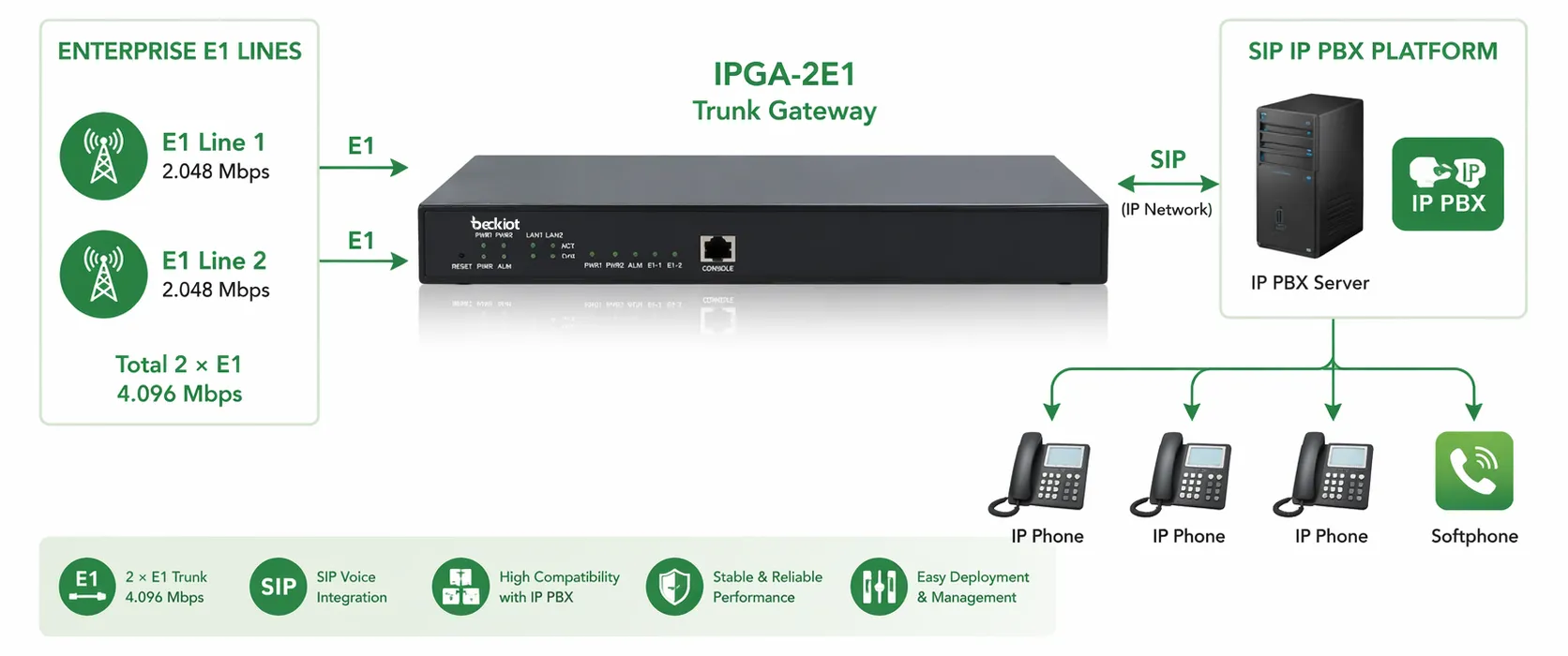
La IPGA-2E1 es una opción ideal para empresas que necesitan conectar recursos de troncal digital en un entorno de IP PBX. Soporta una arquitectura de voz más unificada al vincular el acceso de telecomunicaciones tradicional con el control de llamadas basado en SIP. Esto ayuda a las empresas a retener los recursos de troncal existentes al tiempo que mejora la flexibilidad y manejabilidad de su plataforma de comunicación.
Es especialmente adecuada para proyectos donde las organizaciones quieren centralizar los servicios de voz, estandarizar el enrutamiento de llamadas o fortalecer la interconexión entre el acceso de telecomunicaciones heredado y los sistemas SIP más nuevos.
Para organizaciones con actividad frecuente de llamadas entrantes y salientes, la pasarela ofrece la capacidad de troncal y la flexibilidad de enrutamiento necesarias para cargas de trabajo de voz más exigentes. Esto la hace adecuada para centros de atención al cliente, mesas de soporte, equipos de contacto y otros entornos empresariales con gran intensidad de comunicación, donde el rendimiento fiable de la troncal es crítico.
En estos escenarios, la interoperabilidad estable entre el lado de telecomunicaciones y el lado de IP PBX puede influir directamente en la continuidad del servicio y la eficiencia del manejo de llamadas. La IPGA-2E1 se alinea perfectamente con estos requisitos operativos prácticos.
En organizaciones distribuidas, la IPGA-2E1 puede utilizarse para conectar el acceso de troncal digital en una red de voz empresarial más amplia. Esto ayuda a mejorar la consistencia entre sedes al tiempo que soporta un manejo de llamadas más centralizado, control de políticas de enrutamiento y gestión de recursos de comunicación.
Para empresas con sede central y múltiples oficinas de sucursales, este tipo de despliegue puede simplificar la arquitectura de voz y soportar un modelo operativo más unificado. También es útil en proyectos donde diferentes sedes necesitan mantener capacidades de comunicación coordinadas bajo una plataforma IP compartida.
La pasarela también es una opción práctica para empresas que actualizan su infraestructura de voz tradicional hacia comunicaciones basadas en SIP. Permite que los recursos de troncal E1 existentes sigan siendo útiles al tiempo que habilita una arquitectura de servicio más flexible y moderna. Esto puede ayudar a reducir la presión de migración y preservar las inversiones de telecomunicaciones anteriores durante el proceso de transición.
En lugar de requerir una sustitución repentina de los recursos de voz establecidos, la IPGA-2E1 soporta una vía de modernización por etapas. Esta suele ser una estrategia más realista y consciente de los costes para las empresas que avanzan hacia las comunicaciones IP.
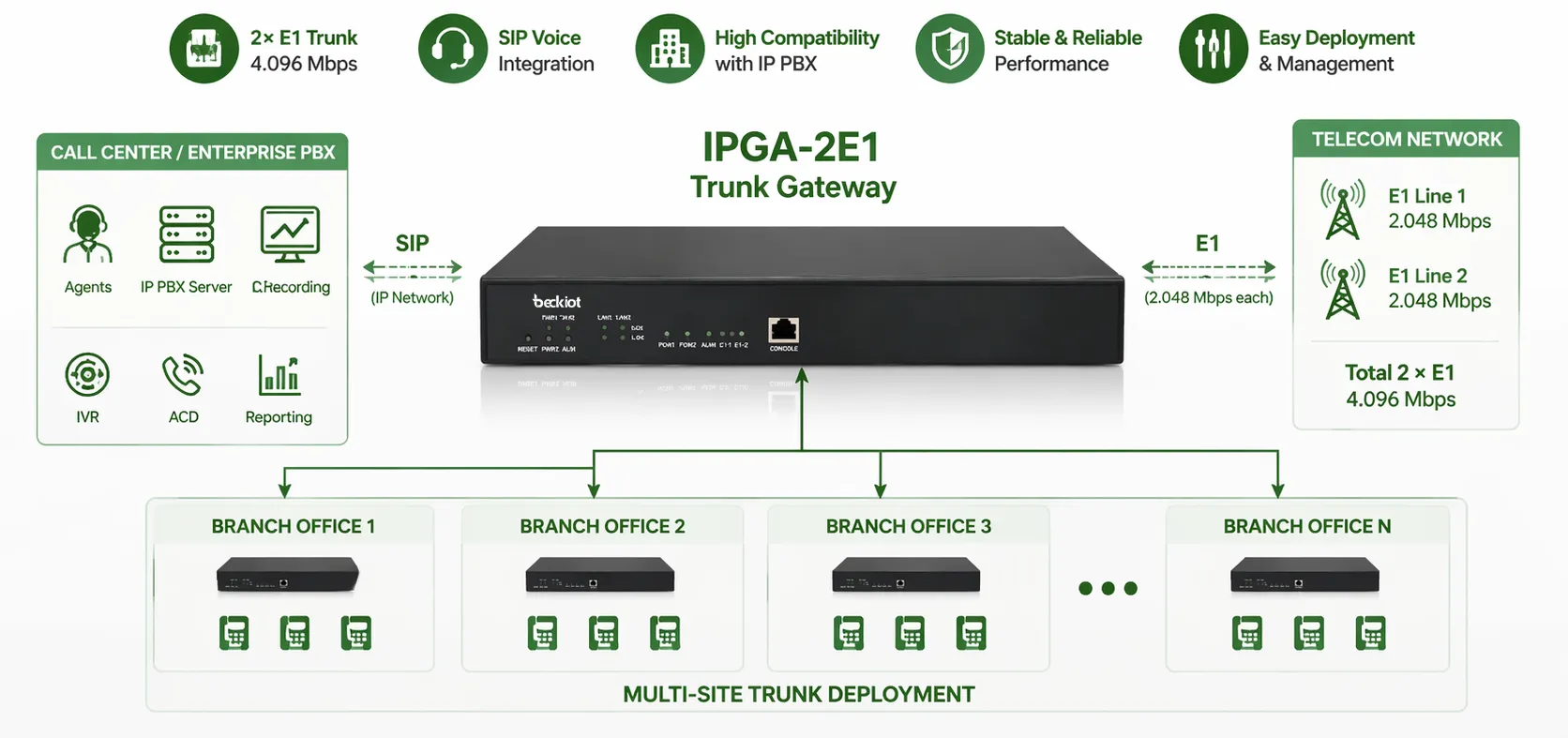
La Becke IPGA-2E1 combina acceso de troncal 2E1, interoperabilidad SIP, flexibilidad de enrutamiento, manipulación de números, amplio soporte de códecs y gestión basada en navegador en una sola plataforma profesional. Para los compradores que necesitan una pasarela de troncal digital fiable y escalable para comunicaciones empresariales, ofrece un equilibrio práctico de valor de despliegue, estabilidad operativa y potencial de integración a largo plazo.
Ya sea el objetivo conectar líneas E1 empresariales a un IP PBX, ampliar la capacidad de llamadas para operaciones de servicios, soportar la interconexión a nivel de sucursal o modernizar un entorno de telecomunicaciones tradicional, la IPGA-2E1 proporciona una solución orientada al despliegue con un claro valor empresarial. Está diseñada no solo para conectar redes, sino también para ayudar a las empresas a construir una infraestructura de voz más manejable y preparada para el futuro.
Su función principal es conectar los recursos de troncal digital 2E1 con plataformas de comunicación basadas en SIP, haciendo que la interconexión de voz empresarial sea más flexible, escalable y fácil de gestionar.
Es más adecuada para despliegues de IP PBX empresarial, centros de llamadas, entornos de atención al cliente, proyectos de comunicación de sucursales y organizaciones que actualizan sus redes de voz tradicionales.
Sí. Es compatible con SIP V1.0 y V2.0 basados en RFC3261, por lo que es adecuada para despliegues con plataformas de telefonía IP basadas en SIP y sistemas de voz empresariales.
Sí. La pasarela admite el enrutamiento entre redes de troncal digital y redes IP, junto con la manipulación de números como la eliminación de dígitos y la adición de prefijos o sufijos.
Soporta señalización relacionada con SS7, modos de lado de usuario y de red ISDN, señalización SS1 y señalización SIP, para un despliegue flexible en entornos de red mixtos.
Sí. Admite gestión basada en web, actualizaciones de software por navegador, pruebas Ping y Tracert, y salida de Syslog para un mantenimiento, monitorización y diagnóstico más sencillos.
Su compatibilidad con múltiples códecs, varios modos DTMF y cancelación de eco ayudan a mejorar la compatibilidad y la calidad de las llamadas entre diferentes sistemas de telecomunicaciones y voz IP.
La IPGA-2E1 se adapta mejor a entornos con mayores demandas de tráfico, mayores requisitos de capacidad de troncal y mayor necesidad de interconexión de voz empresarial estable, especialmente en escenarios de centros de llamadas, PBX empresarial y despliegues en múltiples sedes.
| Ítem | Especificación |
|---|---|
| Interfaz de voz | Interfaz E1/T1, 1/2/4/8× puertos RJ45 |
| Interfaz Ethernet | 2× puertos RJ45 10/100/1000Mbps (10/100/1000 BASE-TX) |
| Protocolos compatibles | SIP V1.0/2.0 (RFC3261), SS7 (TUP, ISUP), ISDN (lado usuario, lado red), SS1 |
| Códecs de audio | G.711A (64 kbps), G.711U (64 kbps), G.729A/B (8 kbps), G.723 (5.3/6.3 kbps), G.722 (64 kbps), AMR-NB (4.75/5.15/5.90/6.70/7.40/7.95/10.20/12.20 kbps), iLBC (13.3/15.2 kbps), SILK (16K/8K, 20 kbps), OPUS (16K/8K, 20 kbps) |
| Protección contra rayos | Clase 4 |
| Dimensiones del producto | 440×44×267 mm (L×H×D) |
| Temperatura de operación | 0°C ~ 40°C |
| Temperatura de almacenamiento | -20°C ~ 85°C |
| Humedad de operación | 8% ~ 90% sin condensación |
| Humedad de almacenamiento | 8% ~ 90% sin condensación |
| Puerto serie | 1× puerto RS-232 (RJ45), velocidad en baudios: 115200bps, bits de datos: 8 bits, bits de parada: 1 bit, paridad: ninguna, control de flujo: ninguno |
| Fuente de alimentación | Voltaje de entrada: 100~240V AC, consumo máximo de energía: ≤12W |
| Características Ethernet | Compatible con auto-negociación y Auto MDI/MDIX |
| Frecuencia de muestreo | 8kHz |