
Tutorial sobre Grabación Automática en Teléfono Industrial Usando Unidad USB

Introducción

Descripción general

Tras activar la función de grabación en el teléfono, puede conectar una unidad USB de mayor capacidad de almacenamiento (hasta 128 GB) para configurar la grabación automática.

Modelos compatibles

Modelos compatibles: teléfonos Android y dispositivos con puerto USB, como la serie X4U
Firmware compatible: todas las versiones correspondientes a los modelos admitidos

Dispositivos y herramientas necesarias

① Dos teléfonos X7A conectados a un conmutador de red, con obtención automática de direcciones IP.
② Un PC de configuración, también conectado al conmutador, con conectividad de red hacia los teléfonos.

Procedimiento de configuración

Insertar la unidad USB en el teléfono

Conecte la unidad USB al teléfono Android. Los teléfonos Android admiten unidades USB de hasta 128 GB, mientras que la serie XU admite hasta 32 GB.

Activar la grabación en la interfaz web del teléfono

En la interfaz web del teléfono, acceda a Aplicaciones - Gestión de grabaciones, active la función de grabación y seleccione Local como modo de grabación. Si necesita reproducir los archivos de grabación en un ordenador, configure el códec de audio en PCMU o PCMA. La interfaz correspondiente se muestra a continuación:
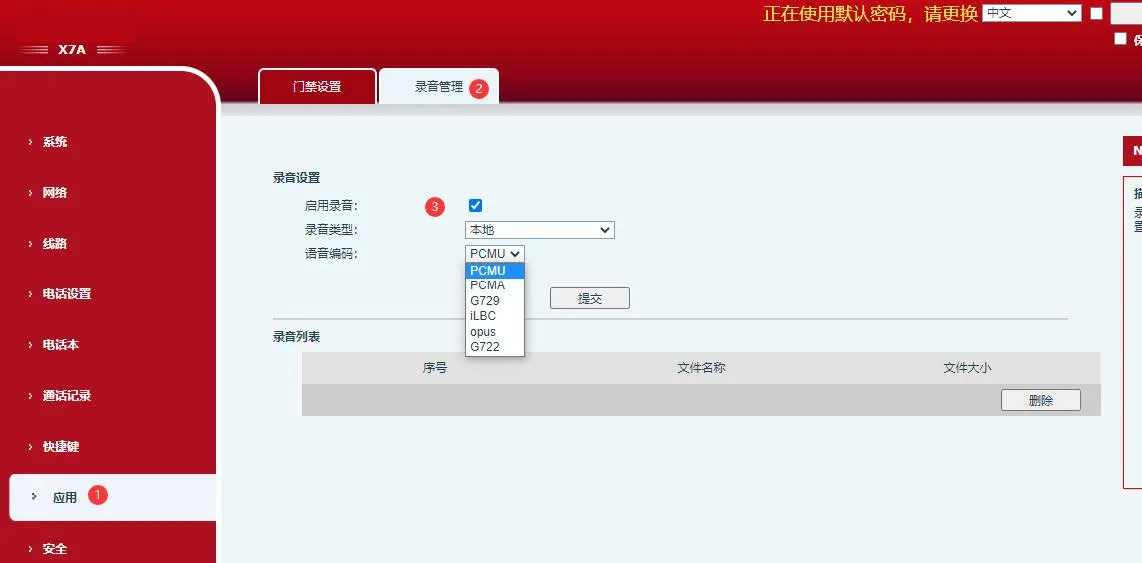
Configurar códec de audio en PCMU o PCMA

Agregar plan de acciones

Acceda a Línea - Plan de acciones y cree un nuevo plan. Configure el número como x, el códec multidifusión en PCMU o PCMA, el tipo en Early y la acción en Record. La interfaz de configuración se muestra a continuación:
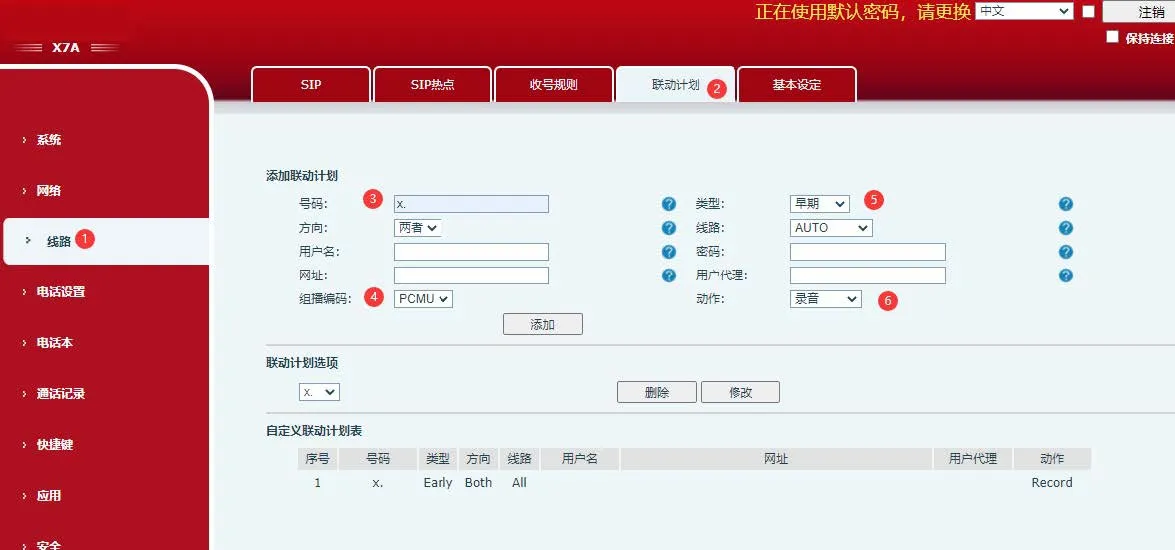
Agregar plan de acciones

Visualización del teléfono tras configuración correcta

Una vez finalizada la configuración, el teléfono iniciará automáticamente la grabación al establecerse la llamada. El icono de grabación se mostrará en color rojo, tal como se indica a continuación:
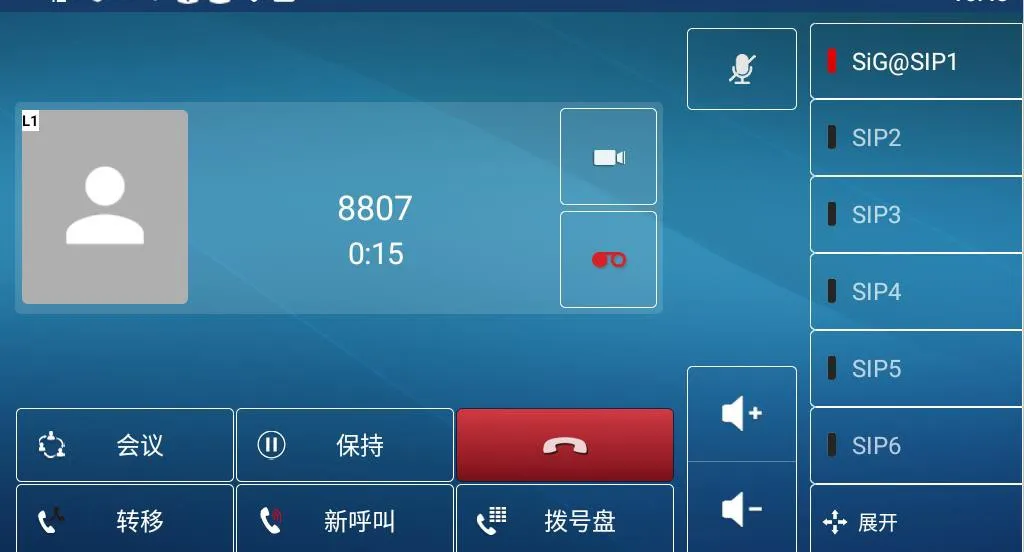
Grabación automática activada durante la llamada

Acceder a los archivos de grabación

Teléfonos Android:
1) Con la unidad USB conectada, acceda a Menú - Gestor de archivos - USB. Los archivos de grabación se guardan en el directorio raíz de la unidad USB.
2) Sin la unidad USB conectada, acceda a Menú - Gestor de archivos - Memoria interna - Grabaciones, tal como se muestra a continuación:
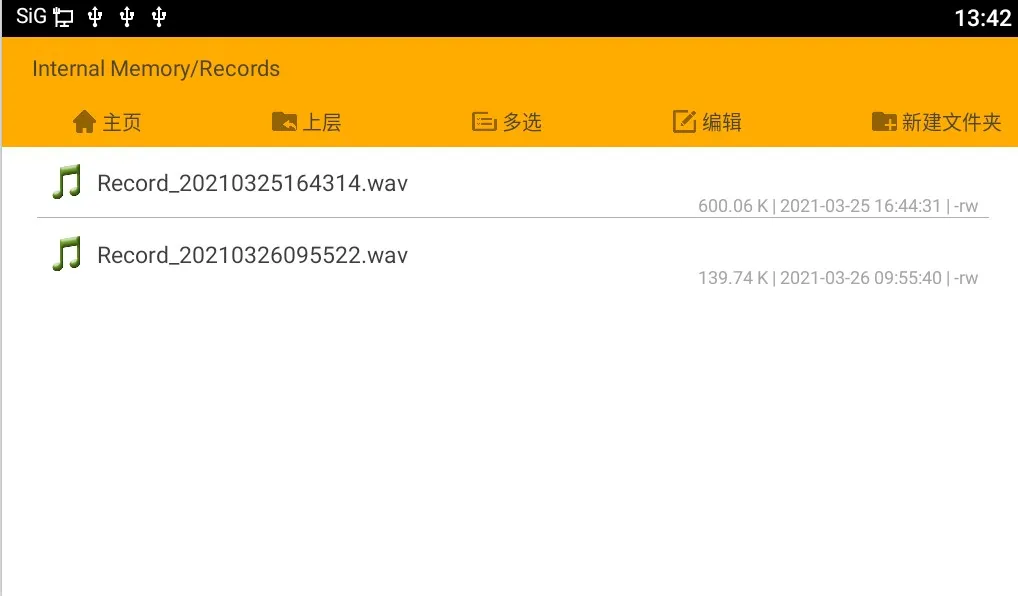
Leer archivos de grabación desde unidad USB
Teléfonos serie X4U: acceda a Menú - Aplicaciones - USB - Explorar audios, tal como se muestra a continuación:
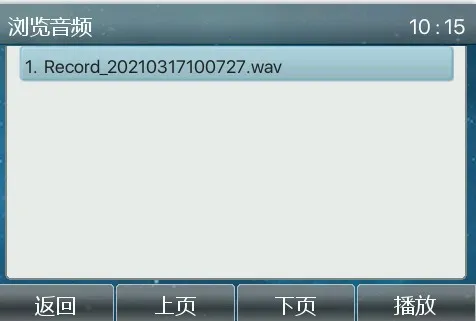
Explorar archivos de audio en teléfonos serie X4U
Notas:
El modelo F600S permite guardar grabaciones tanto en unidad USB como en tarjeta SD. Las reglas de almacenamiento son las siguientes:
(1) Si no se inserta tarjeta SD ni unidad USB externa, los archivos se guardan por defecto en el almacenamiento interno del teléfono.
(2) Si solo se inserta una tarjeta SD externa, las grabaciones se guardan en el directorio raíz de la tarjeta SD.
(3) Si solo se inserta una unidad USB, las grabaciones se guardan en el directorio raíz de la unidad USB.
(4) Si se conectan simultáneamente tarjeta SD y unidad USB, la unidad USB tiene prioridad por defecto y las grabaciones se almacenan en el dispositivo externo de mayor prioridad.
(5) Si ambos dispositivos externos están conectados y se retira uno de ellos, el dispositivo restante pasará a estar activo. Por ejemplo, al extraer la unidad USB, las nuevas grabaciones se guardarán automáticamente en la tarjeta SD externa.

Catálogo
Servicio al cliente Teléfono
We use cookie to improve your online experience. By continuing to browse this website, you agree to our use of cookie.

Cookies

This Cookie Policy explains how we use cookies and similar technologies when you access or use our website and related services. Please read this Policy together with our Terms and Conditions and Privacy Policy so that you understand how we collect, use, and protect information.

By continuing to access or use our Services, you acknowledge that cookies and similar technologies may be used as described in this Policy, subject to applicable law and your available choices.

Updates to This Cookie Policy

We may revise this Cookie Policy from time to time to reflect changes in legal requirements, technology, or our business practices. When we make updates, the revised version will be posted on this page and will become effective from the date of publication unless otherwise required by law.

Where required, we will provide additional notice or request your consent before applying material changes that affect your rights or choices.

What Are Cookies?

Cookies are small text files placed on your device when you visit a website or interact with certain online content. They help websites recognize your browser or device, remember your preferences, support essential functionality, and improve the overall user experience.

In this Cookie Policy, the term “cookies” also includes similar technologies such as pixels, tags, web beacons, and other tracking tools that perform comparable functions.

Why We Use Cookies

We use cookies to help our website function properly, remember user preferences, enhance website performance, understand how visitors interact with our pages, and support security, analytics, and marketing activities where permitted by law.

We use cookies to keep our website functional, secure, efficient, and more relevant to your browsing experience.

Categories of Cookies We Use

Strictly Necessary Cookies

These cookies are essential for the operation of the website and cannot be disabled in our systems where they are required to provide the service you request. They are typically set in response to actions such as setting privacy preferences, signing in, or submitting forms.

Without these cookies, certain parts of the website may not function correctly.

Functional Cookies

Functional cookies enable enhanced features and personalization, such as remembering your preferences, language settings, or previously selected options. These cookies may be set by us or by third-party providers whose services are integrated into our website.

If you disable these cookies, some services or features may not work as intended.

Performance and Analytics Cookies

These cookies help us understand how visitors use our website by collecting information such as traffic sources, page visits, navigation behavior, and general interaction patterns. In many cases, this information is aggregated and does not directly identify individual users.

We use this information to improve website performance, usability, and content relevance.

Targeting and Advertising Cookies

These cookies may be placed by our advertising or marketing partners to help deliver more relevant ads and measure the effectiveness of campaigns. They may use information about your browsing activity across different websites and services to build a profile of your interests.

These cookies generally do not store directly identifying personal information, but they may identify your browser or device.

First-Party and Third-Party Cookies

Some cookies are set directly by our website and are referred to as first-party cookies. Other cookies are set by third-party services, such as analytics providers, embedded content providers, or advertising partners, and are referred to as third-party cookies.

Third-party providers may use their own cookies in accordance with their own privacy and cookie policies.

Information Collected Through Cookies

Depending on the type of cookie used, the information collected may include browser type, device type, IP address, referring website, pages viewed, time spent on pages, clickstream behavior, and general usage patterns.

This information helps us maintain the website, improve performance, enhance security, and provide a better user experience.

Your Cookie Choices

You can control or disable cookies through your browser settings and, where available, through our cookie consent or preference management tools. Depending on your location, you may also have the right to accept or reject certain categories of cookies, especially those used for analytics, personalization, or advertising purposes.

Please note that blocking or deleting certain cookies may affect the availability, functionality, or performance of some parts of the website.

Restricting cookies may limit certain features and reduce the quality of your experience on the website.

Cookies in Mobile Applications

Where our mobile applications use cookie-like technologies, they are generally limited to those required for core functionality, security, and service delivery. Disabling these essential technologies may affect the normal operation of the application.

We do not use essential mobile application cookies to store unnecessary personal information.

How to Manage Cookies

Most web browsers allow you to manage cookies through browser settings. You can usually choose to block, delete, or receive alerts before cookies are stored. Because browser controls vary, please refer to your browser provider’s support documentation for details on how to manage cookie settings.

Contact Us

If you have any questions about this Cookie Policy or our use of cookies and similar technologies, please contact us at support@becke.cc .