
Configuración de grabación de llamadas telefónicas SIP y guía del usuario

Introducción

Descripción general

El teléfono admite la grabación durante llamadas activas. Hay dos métodos de grabación disponibles:

  1. Guardar el flujo RTP como un archivo formateado en el almacenamiento local (USB).

  2. Enviar el flujo RTP a un servidor de grabación para su almacenamiento y gestión.

Modelos aplicables

Este documento se aplica a los teléfonos IP de las series BX3S, BX4, BX5S, BX6, BX7, BX7C, GP210, GP210i y BXU.

Público objetivo

Este documento está destinado a ingenieros internos de I+D y pruebas que necesitan comprender la implementación y mejora de la función de grabación de llamadas del teléfono.

Introducción al marco de grabación

Arquitectura de grabación de llamadas

Se crea un flujo local de solo recepción que se mezcla con el flujo de la llamada. El teléfono se vincula a un puerto local para recibir datos RTP mezclados, que luego se escriben en un archivo local o se envían a un servidor remoto.
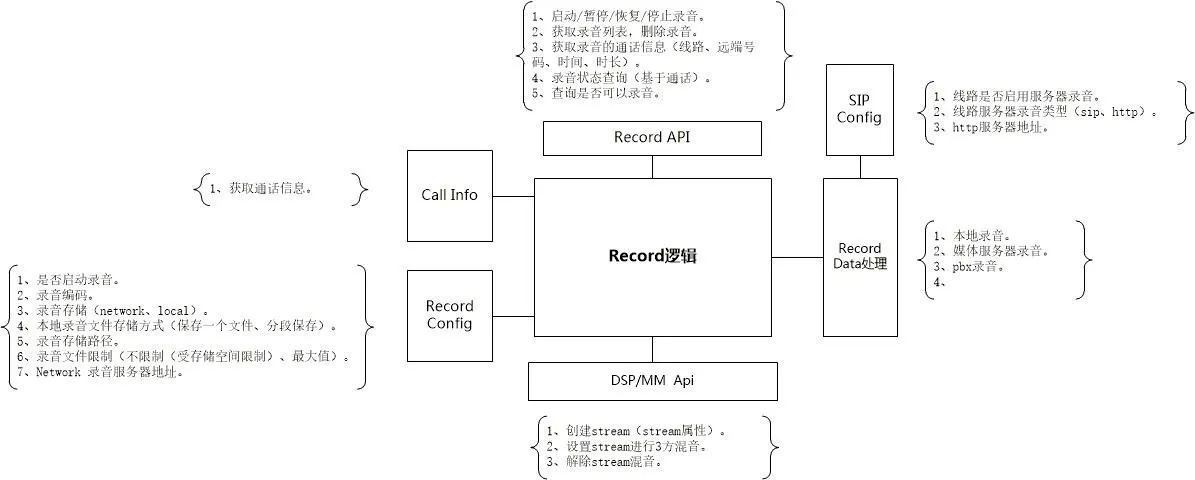
Diagrama de arquitectura de grabación de llamadas

Módulos funcionales de grabación de llamadas

Grabación local

La grabación local requiere una unidad flash USB. El teléfono verifica la capacidad de almacenamiento USB, crea un archivo llamado Record_[SystemTime] y guarda los datos RTP.

Si se alcanza el límite de tamaño de archivo y queda espacio, se crea automáticamente un nuevo archivo. Se admite pausa/reanudación durante la grabación.

Formato de archivo de grabación local (.wav):

char codec[64]int32_t rtpLenint32_t incrementuint32_t dataSizertp datartp data...
  • codec: Códec de audio de grabación

  • rtpLen: Longitud de los datos RTP

  • increment: Incremento de marca de tiempo

  • dataSize: Longitud total de los datos RTP

Grabación en servidor

La grabación en servidor requiere configurar serverAddr y serverPort. La comunicación incluye comandos de control (TCP) y medios RTP (UDP).

Comandos de control (TCP)

El teléfono inicia una sesión de grabación. El servidor asigna un puerto UDP dedicado para la transmisión RTP.

Formato del comando de inicio de grabación
Solicitud: cmd=RecordStartRequest&id=xxx&device=xxx&remote_number=xxx&remote_name=xxx&local_number=xxx&local_name=xxx&dir=in|out&codec=xxx
Respuesta: cmd=RecordStartResponse&id=xxx&result=success|failed&reason=xxx&server=xxx&port=xxx

  1. id: ID de sesión único (aleatorio, fijo durante la grabación)

  2. device: Dirección MAC del teléfono

  3. dir: Dirección de la llamada (entrante/saliente)

  4. codec: Códec RTP (PCMA|PCMU)

  5. server/port: Dirección UDP para la transmisión RTP

Nota: Si el servidor responde "failed", el teléfono mostrará un mensaje de error de grabación.

Formato del comando de detención de grabación
Solicitud: cmd=RecordStopRequest&id=xxx&remote_number=xxx&remote_name=xxx&local_number=xxx&local_name=xxx&reason=xxx
Respuesta: cmd=RecordStopResponse&id=xxx&result=success

En caso de error de socket, ambas partes terminan la sesión y limpian los estados.

Datos RTP (UDP)

El teléfono envía paquetes RTP al servidor a través de UDP hasta que se recibe un comando de detención o se pierde la conexión.

Detención del servicio y reproducción

El teléfono analiza los encabezados del archivo (códec, marca de tiempo, longitud) para calcular la duración de la reproducción y controlarla.

Guía de operación de grabación de llamadas

Grabación local (USB)

La grabación local requiere una unidad USB. Compatible con BX5S/BX6; NO compatible con BX3S/BX4.

  1. Habilite la grabación a través de Aplicaciones > Gestión de grabación, configure el modo en Local.
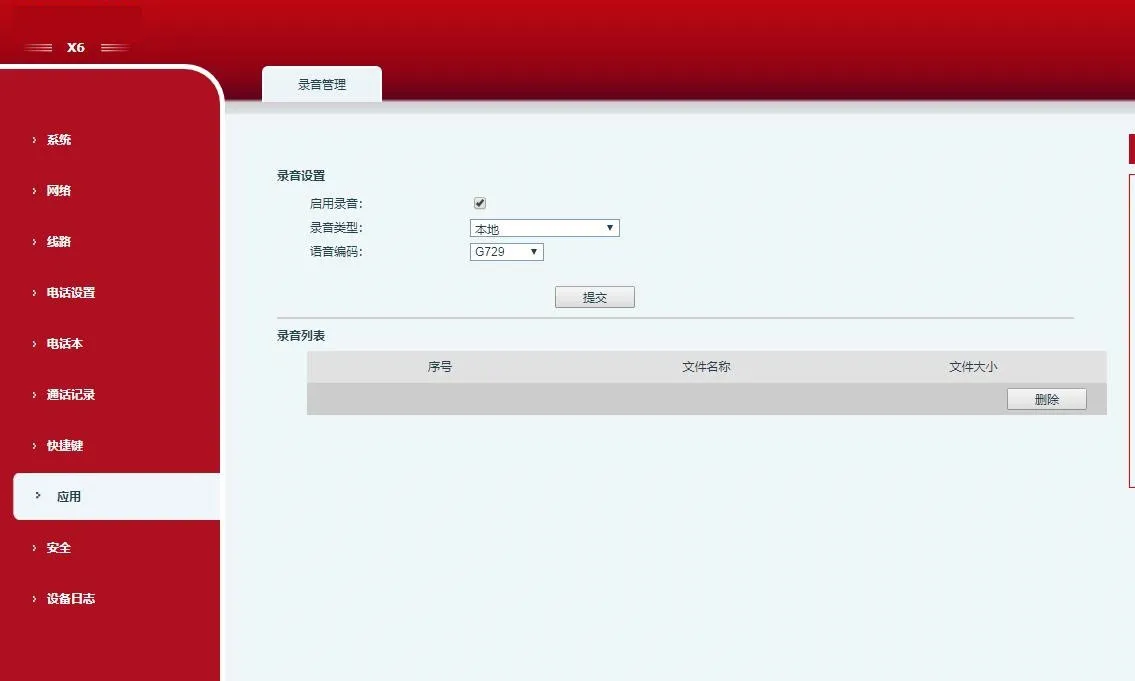
Habilitar modo de grabación local

  1. Configure una tecla DSS/tecla de función como Grabar.

  2. Inserte la unidad USB, realice una llamada, presione la tecla Grabar para comenzar.
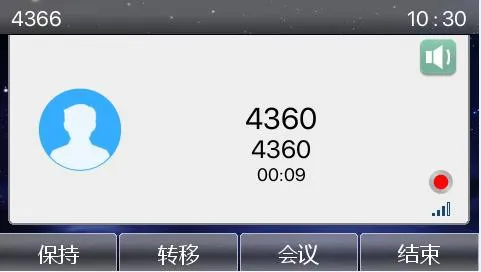
Interfaz de grabación en curso

  1. Presione nuevamente para detener la grabación.

  2. Vea/reproduzca grabaciones a través de Aplicaciones > USB.
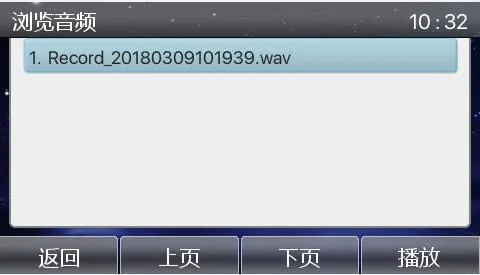
Ver archivos de grabación

Grabación en servidor

Servidor de grabación local

Instale el software RecordServer (admite PCMA/PCMU/G722).

Ruta del servidor: \\172.16.1.8\firmware\Applications\RecordServer
Ejecute RecordServer.exe para iniciar el servicio.

  1. En la interfaz web del teléfono, habilite la grabación, configure el tipo en Red, ingrese la IP/puerto del servidor, seleccione el códec.
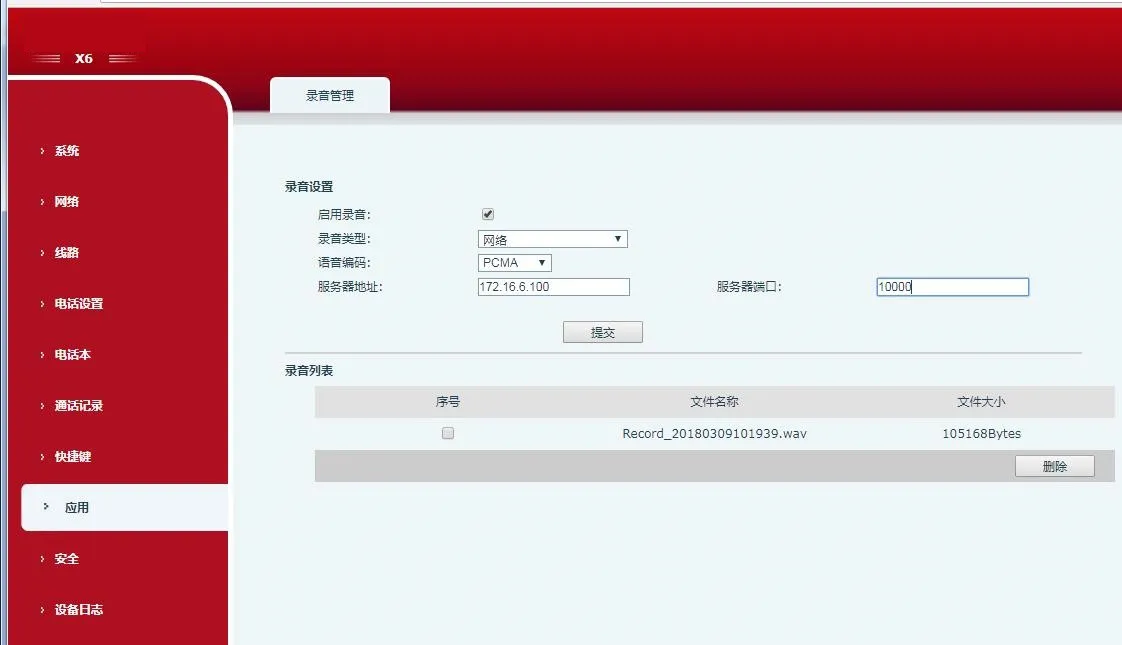
Interfaz web habilitar grabación en red

  1. Realice una llamada, presione la tecla DSS de Grabar.
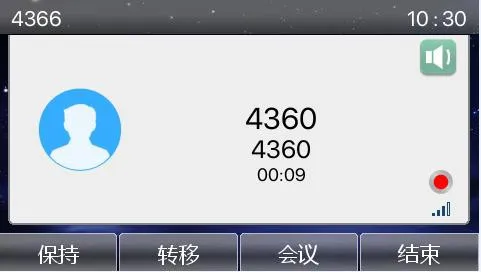
Grabación en curso

  1. Detenga la grabación y descargue los archivos del servidor.
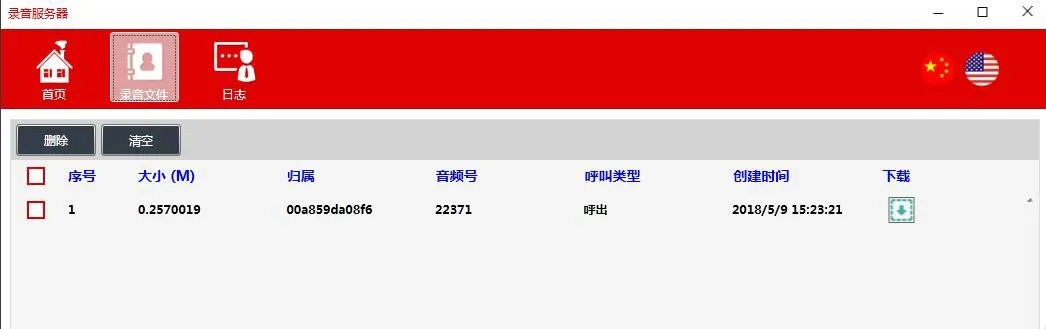
Descargar archivos de grabación

Grabación SIP INFO

Registre el teléfono en un servidor compatible con SIP INFO (por ejemplo, 3CX).

  1. En la interfaz web, habilite la grabación y configure el tipo en SIP INFO.
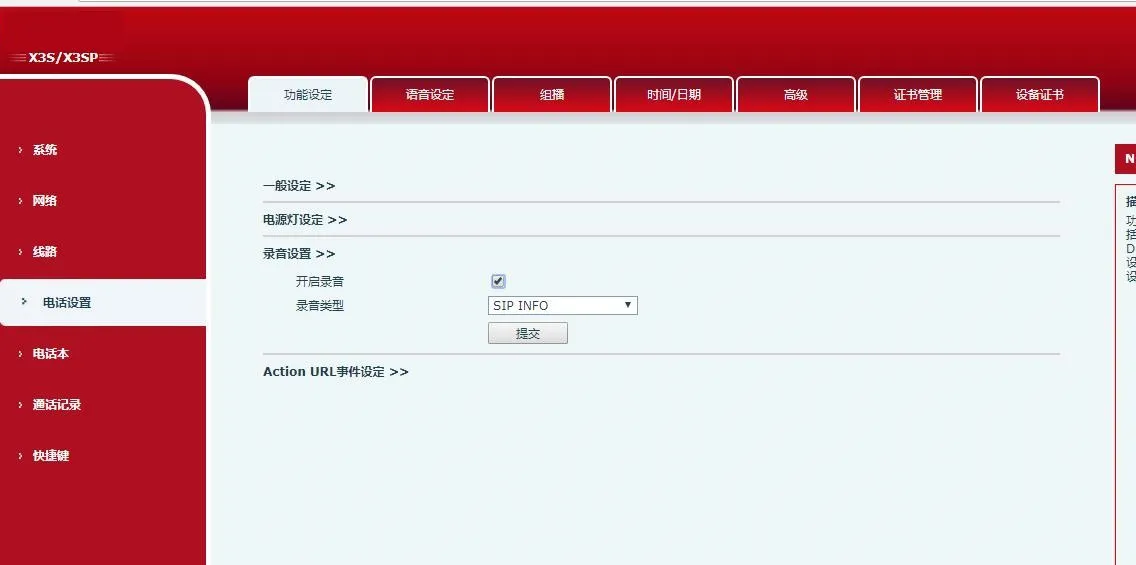
Interfaz para habilitar grabación SIP INFO

  1. Configure una tecla DSS de Grabar, inicie/detenga la grabación durante las llamadas.

  2. Vea las grabaciones en el portal de gestión del servidor SIP (3CX).

Catálogo
Servicio al cliente Teléfono
We use cookie to improve your online experience. By continuing to browse this website, you agree to our use of cookie.

Cookies

This Cookie Policy explains how we use cookies and similar technologies when you access or use our website and related services. Please read this Policy together with our Terms and Conditions and Privacy Policy so that you understand how we collect, use, and protect information.

By continuing to access or use our Services, you acknowledge that cookies and similar technologies may be used as described in this Policy, subject to applicable law and your available choices.

Updates to This Cookie Policy

We may revise this Cookie Policy from time to time to reflect changes in legal requirements, technology, or our business practices. When we make updates, the revised version will be posted on this page and will become effective from the date of publication unless otherwise required by law.

Where required, we will provide additional notice or request your consent before applying material changes that affect your rights or choices.

What Are Cookies?

Cookies are small text files placed on your device when you visit a website or interact with certain online content. They help websites recognize your browser or device, remember your preferences, support essential functionality, and improve the overall user experience.

In this Cookie Policy, the term “cookies” also includes similar technologies such as pixels, tags, web beacons, and other tracking tools that perform comparable functions.

Why We Use Cookies

We use cookies to help our website function properly, remember user preferences, enhance website performance, understand how visitors interact with our pages, and support security, analytics, and marketing activities where permitted by law.

We use cookies to keep our website functional, secure, efficient, and more relevant to your browsing experience.

Categories of Cookies We Use

Strictly Necessary Cookies

These cookies are essential for the operation of the website and cannot be disabled in our systems where they are required to provide the service you request. They are typically set in response to actions such as setting privacy preferences, signing in, or submitting forms.

Without these cookies, certain parts of the website may not function correctly.

Functional Cookies

Functional cookies enable enhanced features and personalization, such as remembering your preferences, language settings, or previously selected options. These cookies may be set by us or by third-party providers whose services are integrated into our website.

If you disable these cookies, some services or features may not work as intended.

Performance and Analytics Cookies

These cookies help us understand how visitors use our website by collecting information such as traffic sources, page visits, navigation behavior, and general interaction patterns. In many cases, this information is aggregated and does not directly identify individual users.

We use this information to improve website performance, usability, and content relevance.

Targeting and Advertising Cookies

These cookies may be placed by our advertising or marketing partners to help deliver more relevant ads and measure the effectiveness of campaigns. They may use information about your browsing activity across different websites and services to build a profile of your interests.

These cookies generally do not store directly identifying personal information, but they may identify your browser or device.

First-Party and Third-Party Cookies

Some cookies are set directly by our website and are referred to as first-party cookies. Other cookies are set by third-party services, such as analytics providers, embedded content providers, or advertising partners, and are referred to as third-party cookies.

Third-party providers may use their own cookies in accordance with their own privacy and cookie policies.

Information Collected Through Cookies

Depending on the type of cookie used, the information collected may include browser type, device type, IP address, referring website, pages viewed, time spent on pages, clickstream behavior, and general usage patterns.

This information helps us maintain the website, improve performance, enhance security, and provide a better user experience.

Your Cookie Choices

You can control or disable cookies through your browser settings and, where available, through our cookie consent or preference management tools. Depending on your location, you may also have the right to accept or reject certain categories of cookies, especially those used for analytics, personalization, or advertising purposes.

Please note that blocking or deleting certain cookies may affect the availability, functionality, or performance of some parts of the website.

Restricting cookies may limit certain features and reduce the quality of your experience on the website.

Cookies in Mobile Applications

Where our mobile applications use cookie-like technologies, they are generally limited to those required for core functionality, security, and service delivery. Disabling these essential technologies may affect the normal operation of the application.

We do not use essential mobile application cookies to store unnecessary personal information.

How to Manage Cookies

Most web browsers allow you to manage cookies through browser settings. You can usually choose to block, delete, or receive alerts before cookies are stored. Because browser controls vary, please refer to your browser provider’s support documentation for details on how to manage cookie settings.

Contact Us

If you have any questions about this Cookie Policy or our use of cookies and similar technologies, please contact us at support@becke.cc .