

Introducción a la llamada de intercomunicador interno
Definición de llamada de intercomunicador interno
Una llamada de intercomunicador interno se refiere a un método de comunicación de voz directa y en tiempo real entre múltiples dispositivos o usuarios autorizados dentro del mismo sistema de comunicación cerrado, generalmente eliminando la necesidad de marcar un número de teléfono completo de 7 o 10 dígitos. A diferencia de las llamadas telefónicas externas que requieren enrutamiento a través de redes públicas, las llamadas de intercomunicador interno se limitan a los límites de la infraestructura de comunicación de una organización específica, lo que garantiza privacidad, velocidad y simplicidad en las interacciones internas.
Se utiliza de manera amplia y extensa en diversos entornos, como oficinas modernas, escuelas primarias y secundarias, hospitales y centros médicos, plantas industriales y edificios comerciales para permitir una comunicación interna rápida, eficiente y sin distracciones. Este tipo de llamada agiliza las interacciones diarias, permitiendo al personal conectarse rápidamente sin los retrasos asociados con otros métodos de comunicación como correos electrónicos o mensajes de texto.
Rol en los sistemas de comunicación modernos
La función de intercomunicador interno se ha convertido en un componente central e indispensable de los sistemas de comunicación IP modernos y las configuraciones de telecomunicaciones empresariales basadas en SIP. A medida que las organizaciones adoptan cada vez más soluciones de comunicaciones unificadas, la función de intercomunicador sirve como una herramienta fundamental que complementa otros canales de comunicación, lo que garantiza una colaboración fluida entre equipos y departamentos.
Permite a los usuarios conectarse instantáneamente con colegas, supervisores o miembros del equipo con solo unas pocas operaciones simples, mejorando significativamente la eficiencia del flujo de trabajo, reduciendo la latencia de la comunicación y acortando el tiempo de respuesta tanto en escenarios rutinarios como urgentes. Esta conectividad instantánea es particularmente valiosa en entornos de ritmo rápido donde cada segundo cuenta.
Las llamadas de intercomunicador interno permiten una comunicación instantánea con un solo toque dentro de organizaciones de todos los tamaños, reduciendo efectivamente los retrasos en la comunicación, minimizando la falta de comunicación y mejorando la coordinación general entre diferentes equipos, departamentos e individuos. Esta conectividad perfecta fomenta un entorno de trabajo más productivo y garantiza que la información crítica se transmita con prontitud.
Cómo funciona la llamada de intercomunicador interno
Llamadas directas a extensiones
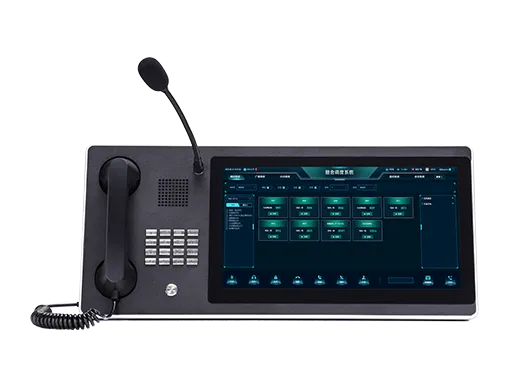
Los usuarios pueden iniciar fácilmente una llamada de intercomunicador interno marcando un número de extensión corto preasignado (generalmente de 2 a 4 dígitos) o presionando una tecla programada dedicada en su dispositivo de comunicación, como un teléfono IP, un terminal de intercomunicación o un auricular de intercomunicación inalámbrico. Este proceso de inicio simplificado elimina la necesidad de recordar o marcar números de teléfono completos, lo que hace que la comunicación sea más rápida y más intuitiva.
Este enfoque fácil de usar elimina la necesidad de procedimientos de marcación complejos, como ingresar códigos de área o códigos de acceso, y reduce el riesgo de errores de marcación. Ya sea en una pequeña oficina o en un gran complejo industrial, las llamadas directas a extensiones garantizan que los usuarios puedan conectarse con su contacto deseado en segundos, sin pasos innecesarios.
Función de respuesta automática
Muchos sistemas de intercomunicación modernos vienen equipados con una función de respuesta automática, que permite que el dispositivo receptor conteste automáticamente la llamada de intercomunicador entrante sin ninguna intervención manual del usuario. Esta función se puede personalizar en función de las preferencias del usuario o las necesidades de la organización, como configurar la respuesta automática solo para extensiones específicas o durante ciertas horas de trabajo.
Esta capacidad de respuesta automática es particularmente útil en escenarios de comunicación con manos libres, como cuando los usuarios están ocupados con tareas que requieren ambas manos, como operar maquinaria en una fábrica, cuidar pacientes en un hospital o escribir en una oficina. Asegura que los mensajes importantes no se pierdan, incluso cuando el usuario no puede responder la llamada manualmente.
Comunicación SIP y basada en IP
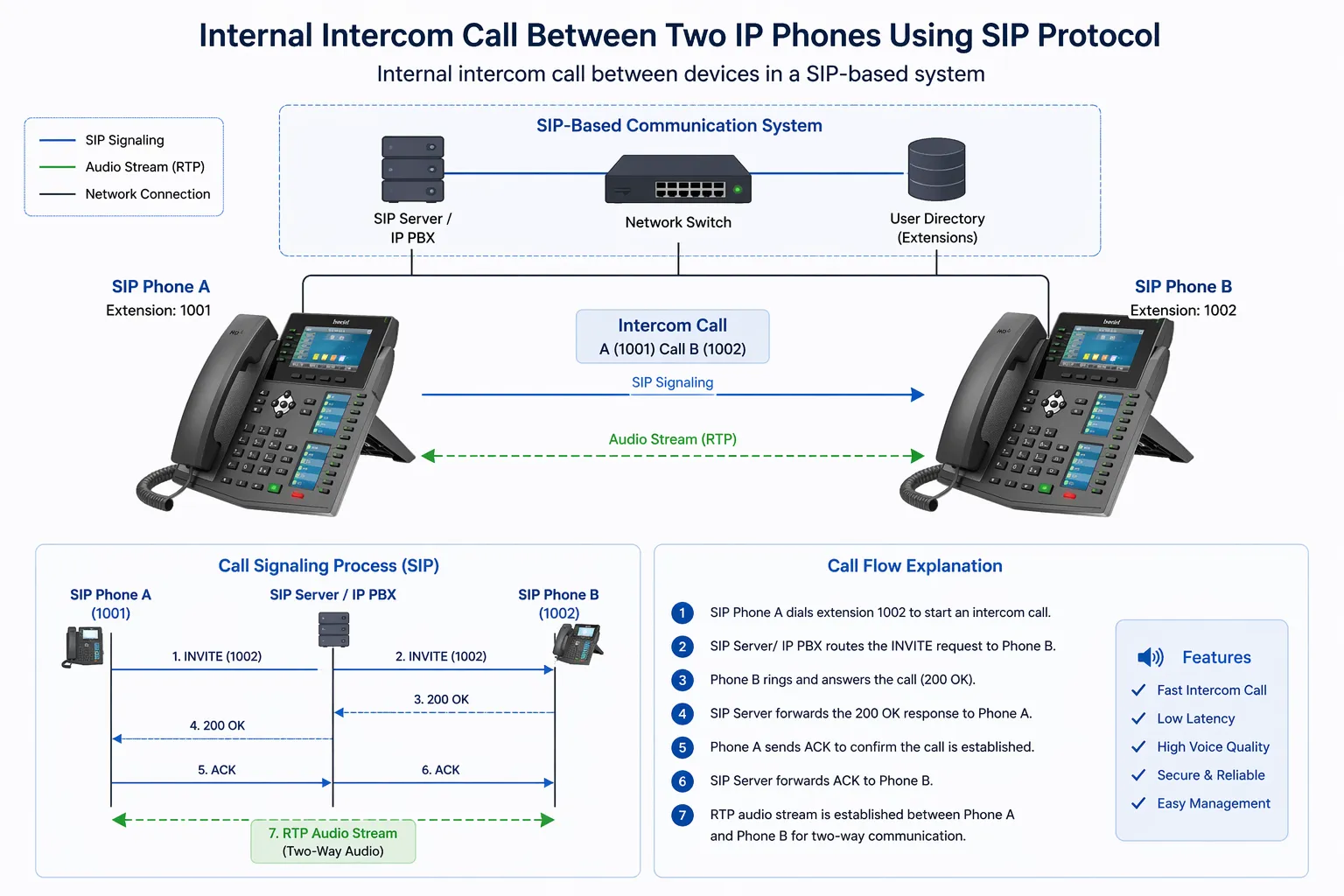
Las modernas llamadas de intercomunicador interno operan a través de redes IP (Protocolo de Internet), aprovechando el Protocolo de inicio de sesión (SIP) para facilitar la comunicación entre dispositivos. Este enfoque basado en IP permite una integración perfecta con otros sistemas de comunicación, incluidos los sistemas IP PBX (Private Branch Exchange), plataformas de comunicaciones unificadas e incluso soluciones de telecomunicaciones basadas en la nube.
Esta integración permite que la funcionalidad de intercomunicación se amplíe en diferentes ubicaciones físicas, como múltiples sucursales de oficinas, plantas de fábricas o alas de hospitales, y en varios tipos de dispositivos, incluidos teléfonos IP, teléfonos inteligentes, tabletas y terminales de intercomunicación. Asegura que los usuarios puedan iniciar y recibir llamadas de intercomunicación independientemente de su ubicación dentro de la red de la organización, mejorando la flexibilidad y la conectividad.
Características clave de la llamada de intercomunicador interno
Comunicación instantánea
Una de las características más destacadas de las llamadas de intercomunicador interno es su capacidad para proporcionar una conexión inmediata y en tiempo real entre los usuarios sin ningún retraso perceptible. A diferencia de las llamadas telefónicas tradicionales que pueden requerir un enrutamiento de red o un tiempo de configuración de llamadas, las llamadas de intercomunicación establecen un enlace directo entre los dispositivos casi al instante, asegurando que los mensajes se transmitan y reciban en tiempo real.
Esta conectividad instantánea hace que las llamadas de intercomunicación sean ideales para comunicaciones urgentes, como notificaciones de emergencia, asignaciones de tareas urgentes o resolución de problemas inmediatos. Ya sea que se trate de alertar a un equipo sobre un problema de seguridad en una fábrica o de coordinar un cambio de último minuto en una reunión, las llamadas de intercomunicación garantizan que la información crítica se entregue sin demora.
Operación con manos libres
Con soporte incorporado para respuesta automática y funcionalidad de altavoz de alta calidad, los sistemas de intercomunicación internos permiten a los usuarios comunicarse de manera efectiva sin necesidad de levantar un auricular o sostener un dispositivo. Esta operación de manos libres es posible gracias a la tecnología de audio avanzada, que incluye micrófonos con cancelación de ruido y altavoces potentes que garantizan una transmisión de voz clara incluso en entornos ruidosos.
Esta capacidad de manos libres mejora significativamente la comodidad y la eficiencia en el trabajo, permitiendo a los usuarios continuar con sus tareas mientras participan en una conversación. Por ejemplo, los trabajadores de la fábrica pueden operar equipos mientras discuten problemas de producción, las enfermeras pueden atender a los pacientes mientras reciben instrucciones de los médicos y el personal de la oficina puede escribir o archivar documentos mientras están en una llamada de intercomunicación.
Marcación de un solo toque
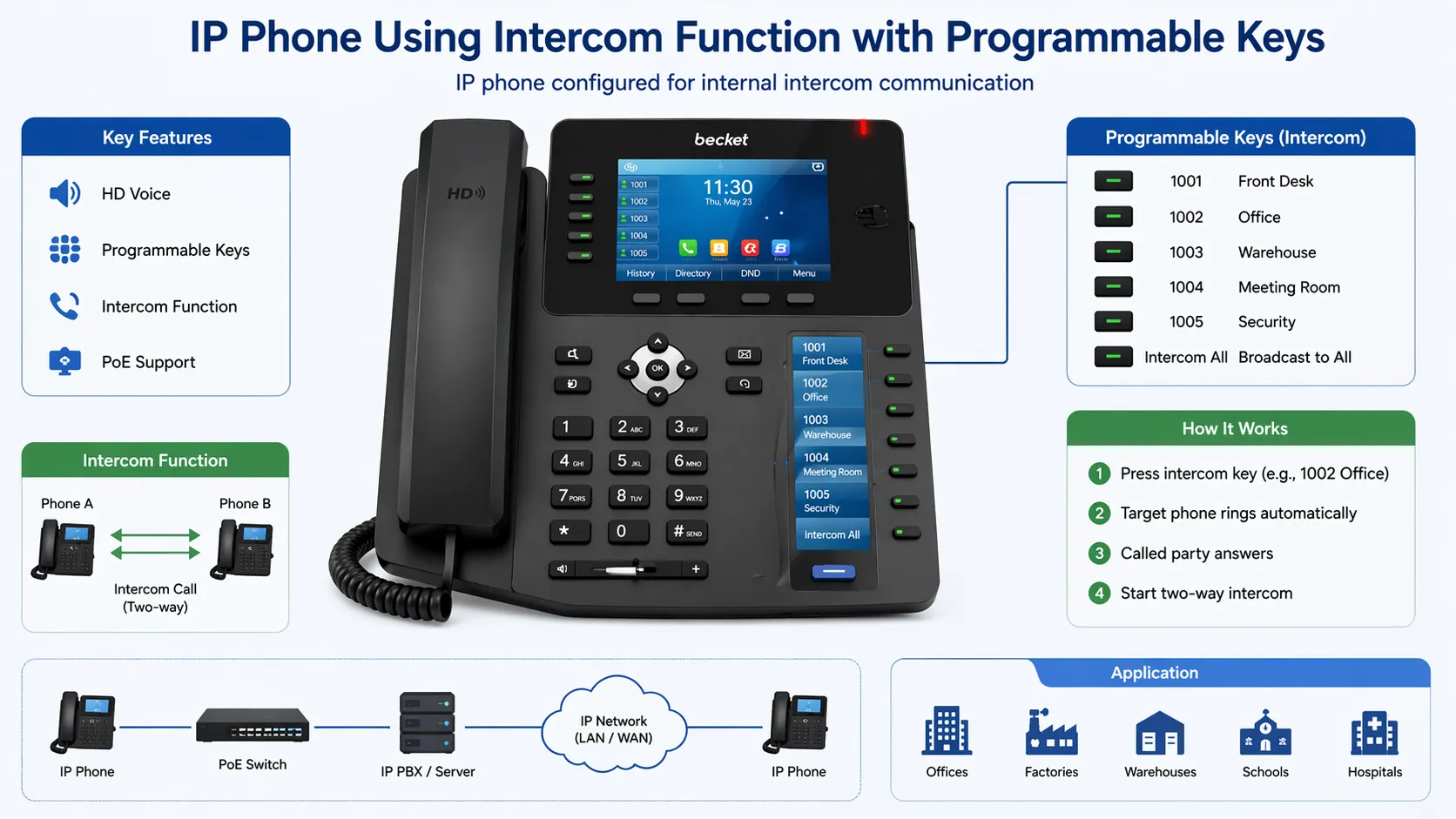
La mayoría de los dispositivos de intercomunicación modernos se pueden configurar con teclas de función programables, que se pueden configurar para iniciar directamente llamadas de intercomunicación a extensiones específicas, departamentos o grupos de usuarios con una sola pulsación. Estas teclas programables se pueden personalizar en función de las necesidades de comunicación diarias del usuario, como configurar una tecla para la recepción, un líder de equipo o un departamento específico como TI o RR. HH.
Esta función de marcación de un solo toque simplifica los flujos de trabajo de comunicación interna, reduciendo el tiempo y el esfuerzo necesarios para conectarse con sus colegas. Elimina la necesidad de memorizar números de extensión o navegar a través de menús complejos, lo que hace que la comunicación sea más eficiente y fácil de usar, especialmente para los usuarios que realizan llamadas de intercomunicación frecuentes durante todo el día.
Integración con sistemas de comunicación
Una ventaja clave de las modernas funciones de intercomunicación interna es su capacidad para integrarse a la perfección con una amplia gama de sistemas de comunicación, incluidos los sistemas IP PBX, servidores SIP, sistemas de localización y plataformas de comunicaciones unificadas. Esta integración permite a las organizaciones crear un ecosistema de comunicación coherente donde las llamadas de intercomunicación se pueden combinar con otras características como el desvío de llamadas, el correo de voz y las videoconferencias.
Las soluciones líderes de proveedores como Becke Telcom combinan funciones de intercomunicador interno, megafonía y comunicaciones unificadas en una única plataforma integrada, lo que permite a las organizaciones optimizar sus procesos de comunicación y reducir la necesidad de múltiples sistemas separados. Esta integración no solo mejora la eficiencia sino que también asegura la consistencia y la compatibilidad en todos los canales de comunicación.
Aplicaciones de la llamada de intercomunicador interno
Entornos de oficina
Las llamadas de intercomunicador interno se utilizan ampliamente en entornos de oficina de todos los tamaños, desde pequeñas empresas emergentes hasta grandes corporaciones, para facilitar la comunicación rápida y eficiente entre departamentos, equipos y miembros individuales del personal. Son particularmente útiles para interacciones de rutina, como hacer una pregunta rápida, confirmar la hora de una reunión o solicitar asistencia a un colega en otra parte de la oficina.
Al permitir la comunicación instantánea, las llamadas de intercomunicador reducen la necesidad de correos electrónicos, mensajes de texto que consumen mucho tiempo o de caminar por la oficina para hablar con alguien en persona. Esto no solo ahorra tiempo sino que también minimiza las distracciones, lo que permite a los empleados centrarse en su trabajo mientras mantienen una comunicación eficaz con su equipo.
Instalaciones de salud
Los hospitales, las clínicas y otros centros de salud dependen en gran medida de los sistemas de intercomunicación internos para una comunicación rápida y confiable entre enfermeras, médicos, personal administrativo y otros profesionales de la salud. En estos entornos de alto riesgo, la comunicación rápida puede significar la diferencia entre la vida y la muerte, lo que convierte a las llamadas de intercomunicación en una herramienta esencial para las operaciones diarias.
Los sistemas de intercomunicación en las instalaciones de atención médica se utilizan para una variedad de propósitos, que incluyen convocar a enfermeras a las habitaciones de los pacientes, coordinar respuestas de emergencia, comunicarse entre los quirófanos y las áreas de recuperación, y compartir información crítica del paciente entre departamentos. Esto mejora el tiempo de respuesta en situaciones críticas, garantiza que la atención al paciente se brinde sin demora y mejora la eficiencia general en las operaciones de atención médica.
Uso industrial y de fábrica
Las fábricas, las plantas de fabricación y las instalaciones industriales dependen de las llamadas de intercomunicador interno para una coordinación perfecta entre las salas de control, las líneas de producción, los equipos de mantenimiento y el personal del almacén. Estos entornos a menudo son grandes, ruidosos y están dispersos, lo que hace que la comunicación instantánea sea esencial para garantizar operaciones fluidas y mantener la seguridad.
La comunicación con manos libres a través de sistemas de intercomunicación es especialmente valiosa en entornos industriales ruidosos, donde los trabajadores pueden usar protección para los oídos o operar maquinaria ruidosa. Las llamadas de intercomunicador permiten al personal comunicarse claramente sin tener que quitarse la protección auditiva o detener su trabajo, reduciendo el riesgo de accidentes y mejorando la productividad.
Instituciones educativas
Las escuelas, los colegios y las universidades utilizan sistemas de intercomunicación internos para facilitar la comunicación entre las aulas, las oficinas administrativas, las salas de profesores y la seguridad del campus. Estos sistemas son una herramienta esencial para gestionar las operaciones diarias, garantizar la seguridad de los estudiantes y coordinar las actividades en todo el campus.
Las llamadas de intercomunicador en las instituciones educativas se utilizan para una variedad de propósitos, que incluyen hacer anuncios en todas las aulas, coordinar entre maestros y personal administrativo, convocar al personal en caso de una emergencia y facilitar la comunicación entre diferentes partes del campus. Apoyan la coordinación eficiente en todo el campus, asegurando que las operaciones diarias funcionen sin problemas y que los estudiantes y el personal se mantengan informados.
Preguntas frecuentes
¿Cuál es la diferencia entre el intercomunicador y las llamadas telefónicas?
La diferencia clave entre las llamadas de intercomunicador interno y las llamadas telefónicas regulares radica en su alcance, proceso de inicio y enrutamiento. Las llamadas de intercomunicador son estrictamente internas del sistema de comunicación de una organización específica, a menudo se conectan al instante y, por lo general, no requieren marcar un número de teléfono completo, sino que utilizan extensiones cortas o teclas de un solo toque. Por el contrario, las llamadas telefónicas habituales pueden ser internas o externas, pueden requerir marcar un número de teléfono completo (incluidos los códigos de área para las llamadas externas) y, a menudo, deben enrutarse a través de redes telefónicas públicas o privadas, lo que puede introducir retrasos. Además, las llamadas de intercomunicación están diseñadas para una comunicación rápida e informal, mientras que las llamadas telefónicas pueden ser más formales y pueden incluir características como llamada en espera o correo de voz que son menos comunes en los sistemas de intercomunicación básicos.
¿Las llamadas de intercomunicación requieren SIP?
Los modernos sistemas de intercomunicación internos, especialmente aquellos integrados con redes de comunicación basadas en IP, generalmente usan el Protocolo de inicio de sesión (SIP) para facilitar la comunicación entre dispositivos. SIP permite una integración perfecta con sistemas IP PBX, plataformas de comunicaciones unificadas y otras herramientas de telecomunicaciones modernas, lo que lo convierte en un estándar para la mayoría de las configuraciones de intercomunicación contemporáneas. Sin embargo, los sistemas de intercomunicación analógicos tradicionales todavía existen, y estos no requieren redes SIP o IP, sino que dependen del cableado físico y señales analógicas para transmitir la comunicación de voz. El uso de SIP depende del tipo de sistema de intercomunicación y de la infraestructura de comunicación general de la organización.
¿Pueden las llamadas de intercomunicación ser de manos libres?
Sí, muchos sistemas de intercomunicación internos modernos admiten la comunicación de manos libres a través de una combinación de funcionalidad de respuesta automática y tecnología de altavoz incorporada. La mayoría de los dispositivos de intercomunicación, incluidos los teléfonos IP, los terminales de intercomunicación y los auriculares inalámbricos, están equipados con altavoces de alta calidad y micrófonos con cancelación de ruido que permiten a los usuarios hablar y escuchar sin levantar un auricular o sostener el dispositivo. Esta capacidad de manos libres es particularmente útil en entornos donde los usuarios necesitan mantener sus manos libres para tareas de trabajo, como fábricas, hospitales u oficinas concurridas, y se puede personalizar según las preferencias del usuario o las necesidades de la organización.