

El full dúplex es un modo de comunicación que permite que ambos extremos de una conexión transmitan y reciban audio al mismo tiempo. En términos prácticos, significa que dos personas pueden hablar con naturalidad sin esperar a que la otra pare. A diferencia de los sistemas half dúplex, que requieren turnos, el full dúplex permite conversaciones continuas que se asemejan más a la comunicación cara a cara.
Esta capacidad es muy importante en las redes de voz modernas porque hoy se espera que la comunicación sea inmediata, natural y eficiente. En sistemas VoIP, plataformas de interfonos SIP, consolas de despacho, telefonía industrial y entornos de comunicaciones unificadas, los usuarios a menudo necesitan interrumpir, confirmar, coordinar y responder en tiempo real. El full dúplex apoya ese comportamiento al eliminar el ritmo de parada y arranque que limita los métodos de comunicación más simples.
Aunque la idea suena sencilla, el full dúplex depende de una ingeniería de audio cuidadosa. El sistema debe gestionar rutas de voz simultáneas, controlar el eco, reducir el ruido de fondo, mantener baja latencia y preservar la inteligibilidad del habla incluso cuando ambas partes hablan a la vez. Por esta razón, el full dúplex no es solo una función conversacional. Es una base técnica para la comunicación de voz de grado profesional.

El full dúplex permite que ambos lados de una conversación hablen y escuchen al mismo tiempo en tiempo real.
Qué significa el full dúplex en la comunicación de voz
Audio bidireccional simultáneo
En el corazón del full dúplex está la capacidad de transportar audio en ambas direcciones a la vez. Cada lado de la conversación tiene una ruta de transmisión activa y una ruta de recepción activa que operan juntas, no en secuencia. Esto crea un flujo conversacional natural porque los usuarios no necesitan esperar un cambio de canal o liberar el pulsar-para-hablar antes de responder.
En escenarios reales de comunicación, esto importa más de lo que parece. La conversación humana depende del tiempo, los acuses cortos, las interrupciones y el solapamiento del habla. Las personas dicen naturalmente cosas como “sí”, “adelante” o “espera” mientras la otra persona todavía está hablando. Un sistema full dúplex admite esos comportamientos, haciendo la comunicación más rápida e intuitiva, especialmente cuando hay que tomar decisiones rápidamente.
Por eso el full dúplex es ampliamente preferido en telefonía, interfonos, conferencias, centros de mando y entornos de trabajo colaborativo. Proporciona una experiencia de voz que coincide con la interacción humana natural, en lugar de forzar una comunicación con un patrón rígido de intercambio.
Cómo se diferencia del half dúplex
A menudo se entiende mejor el full dúplex comparándolo con el half dúplex. En un sistema half dúplex, la comunicación puede ir en ambas direcciones, pero no al mismo tiempo. Una parte habla, luego la otra responde después de que el canal se libera. El comportamiento clásico de un walkie-talkie es el ejemplo más conocido. Este método es útil en algunos entornos de radio, pero cambia la forma en que las personas se comunican y puede ralentizar la interacción.
Por el contrario, el full dúplex elimina la necesidad de turnos. El resultado es una discusión más natural, menos señales perdidas y una mejor eficiencia conversacional. En atención al cliente, coordinación de emergencias, operaciones industriales y telefonía de oficina, esa diferencia puede afectar fuertemente la comprensión y la velocidad. Un usuario puede aclarar de inmediato, interrumpir para evitar un error o confirmar detalles sin esperar su turno para hablar.
También por eso el full dúplex se asocia comúnmente con una mayor calidad de comunicación. No solo suena mejor por el rendimiento del códec o el diseño del altavoz. Suena mejor porque el modelo de comunicación está mejor alineado con la forma en que las personas hablan realmente.
El full dúplex mejora la comunicación no solo al permitir que el sonido pase en ambas direcciones, sino al permitir que la conversación humana se comporte con normalidad.
Cómo funciona el full dúplex
Rutas separadas de transmisión y recepción
Un sistema de audio full dúplex funciona manteniendo canales simultáneos de transmisión y recepción. En sistemas digitales, esto puede manejarse mediante flujos de paquetes de red, procesamiento DSP, gestión de códecs y control de audio en el terminal. En despliegues prácticos, el dispositivo terminal captura la voz local a través de un micrófono mientras también reproduce la voz entrante a través de un altavoz o auricular sin forzar a que una ruta detenga a la otra.
En entornos SIP y VoIP, el full dúplex normalmente opera sobre sesiones de voz basadas en paquetes donde ambos flujos de medios permanecen activos durante toda la llamada. El terminal, el motor de medios y la red contribuyen al rendimiento. La ruta del micrófono debe capturar voz utilizable, la ruta del altavoz debe reproducir el audio entrante con claridad, y el dispositivo debe evitar que su propia salida de altavoz se realimente al micrófono de manera perjudicial.
Por esto, el rendimiento del full dúplex depende de más que la señalización de llamada. Un dispositivo SIP puede establecer una llamada con éxito, pero lograr un audio full dúplex sólido requiere un buen diseño acústico, control de ganancia adecuado, cancelación de eco y un transporte de red estable.
Cancelación de eco y procesamiento de audio
Uno de los principales desafíos técnicos en la comunicación full dúplex es el eco. Cuando un dispositivo reproduce voz entrante a través de un altavoz, ese sonido puede ser captado nuevamente por el micrófono y enviado de vuelta a la llamada. Si no se controla, los usuarios pueden escuchar reflejos retardados de su propia voz, lo que puede hacer que la conversación sea incómoda o inutilizable.
Para resolverlo, los dispositivos full dúplex a menudo utilizan cancelación acústica de eco, procesamiento digital de señales, control automático de ganancia y algoritmos de reducción de ruido. La cancelación de eco intenta identificar y eliminar la señal de reproducción del propio dispositivo del flujo de salida del micrófono. La supresión de ruido ayuda a reducir el sonido ambiental, mientras que el control de ganancia mantiene los niveles equilibrados para que una parte no domine a la otra.
Estos mecanismos son especialmente importantes en interfonos con altavoz, terminales SIP industriales, micrófonos de despacho y dispositivos de comunicación para salas. En tales productos, el full dúplex solo es efectivo cuando el habla simultánea permanece clara y estable en condiciones acústicas reales.
Rendimiento de red y baja latencia
La conversación full dúplex también depende de que la latencia se mantenga lo suficientemente baja para una interacción natural. Si el retardo de red se vuelve demasiado alto, los usuarios pueden comenzar a interrumpirse involuntariamente o escuchar las respuestas demasiado tarde. En sistemas basados en paquetes, la latencia puede verse influenciada por la selección del códec, el buffer de jitter, la pérdida de paquetes, la eficiencia del enrutamiento y la congestión general de la red.
Por esta razón, la calidad del audio full dúplex está estrechamente ligada al diseño de la red VoIP. Las políticas de QoS, la conmutación estable, el ancho de banda adecuado y el comportamiento correctamente configurado de SIP y RTP contribuyen a un mejor resultado. En sistemas de comunicación críticos, la diferencia entre un rendimiento full dúplex aceptable y excelente a menudo se reduce a lo bien que se haya diseñado la red subyacente.
En otras palabras, el full dúplex no es solo una capacidad del terminal. Es una capacidad de sistema respaldada conjuntamente por el diseño del dispositivo, el procesamiento de medios y la calidad de la red.
Beneficios de audio del full dúplex
Conversación más natural
El beneficio más obvio del full dúplex es la naturalidad conversacional. Los usuarios pueden hablar, reaccionar, interrumpir cortésmente y confirmar información en tiempo real. Esto reduce la fricción y hace que la comunicación se sienta inmediata en lugar de procedimental. En entornos donde las personas usan la comunicación de voz todo el día, esta mejora tiene un efecto directo en la comodidad y la productividad.
La interacción natural es especialmente valiosa en la coordinación de equipos, el soporte al cliente y la comunicación de campo a sala de control. Cuando los usuarios no tienen que pensar en el control del canal, pueden concentrarse en el mensaje mismo. Esto hace que el full dúplex sea particularmente útil en entornos complejos donde la velocidad y la comprensión importan más que un orden estricto al hablar.
Ese beneficio también mejora la adopción por parte de los usuarios. Los sistemas que se sienten más fáciles de usar tienen más probabilidades de ser utilizados correctamente y de manera consistente, lo cual es importante en despliegues empresariales y relacionados con la seguridad.
Mejor claridad en comunicaciones rápidas
El full dúplex mejora la claridad no solo mediante el procesamiento de audio, sino también a través del tiempo. Cuando ambos lados pueden responder de inmediato, los malentendidos se pueden corregir antes de que crezcan. Un despachador puede detener una instrucción errónea a mitad de camino. Una enfermera puede interrumpir con información urgente de un paciente. Un técnico puede confirmar una ubicación mientras la otra parte todavía la está describiendo.
Esto es particularmente importante en situaciones donde los pequeños retrasos crean riesgo operativo. En sistemas half dúplex, los usuarios pueden necesitar esperar a que la otra parte termine de hablar antes de corregir un error. En sistemas full dúplex, la aclaración ocurre más rápido y de manera más natural. El resultado no es solo una conversación más fluida, sino una mejor precisión en la comunicación.
Debido a esto, a menudo se considera que el full dúplex es esencial en entornos donde la comunicación apoya operaciones en vivo en lugar de discusiones informales.
Reducción de la fatiga comunicativa
Con el tiempo, el half dúplex o el audio mal procesado pueden volverse mentalmente agotadores. Los usuarios deben prestar atención adicional al tiempo, evitar interrupciones y compensar las señales conversacionales que faltan. El full dúplex reduce esa tensión al dejar que el discurso fluya normalmente. Las personas gastan menos esfuerzo en gestionar el canal y más en comprender el contenido.
Esto es importante en centros de despacho, mesas de ayuda, puestos de seguridad y operaciones industriales donde el personal puede manejar interacciones de voz repetidas durante turnos largos. Una menor fatiga comunicativa puede mejorar la concentración, acortar las llamadas y reducir la probabilidad de instrucciones repetidas.
En este sentido, el full dúplex no es solo una característica de audio, sino una ventaja de usabilidad que respalda el rendimiento operativo a largo plazo.
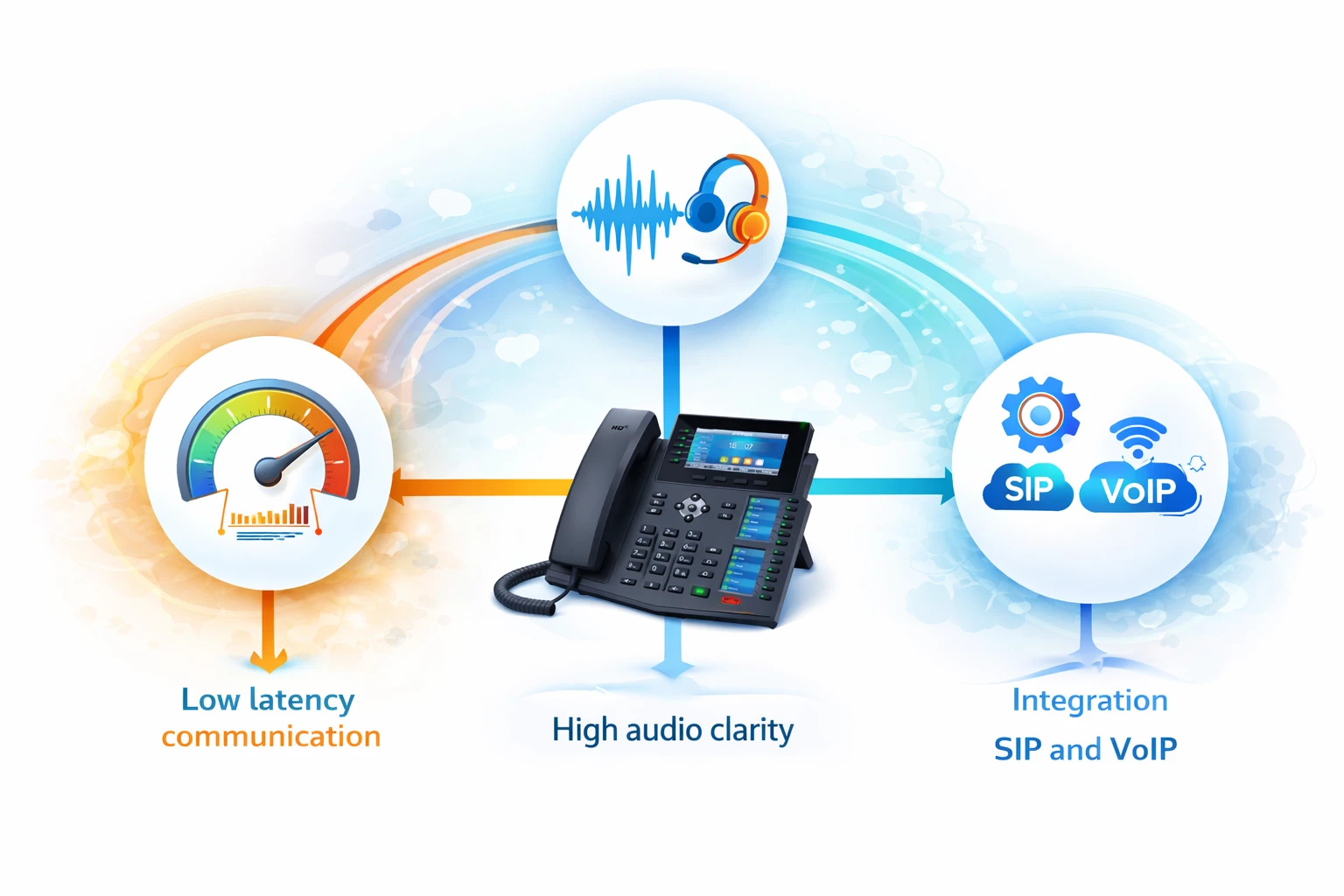
El audio full dúplex eficaz combina el flujo de voz simultáneo con control de eco, baja latencia y reproducción clara del habla.
Características técnicas de los sistemas full dúplex
Control de eco, reducción de ruido y DSP
La mayoría de los dispositivos full dúplex modernos dependen de la mejora de audio basada en DSP. La cancelación de eco suele ser la función más importante, pero rara vez es la única. La reducción de ruido, el ajuste automático de ganancia, la optimización del micrófono y la sintonización del altavoz también son comunes. Juntas, estas características ayudan a que el dispositivo siga siendo utilizable en entornos reales en lugar de solo en condiciones ideales de laboratorio.
En productos de comunicación industrial y de áreas públicas, el DSP se vuelve aún más importante porque el entorno acústico suele ser difícil. El ruido de maquinaria, las superficies reflectantes, el viento y la distancia al hablante afectan el rendimiento. Los dispositivos full dúplex para estos entornos deben diseñarse para mantener un habla comprensible incluso cuando el entorno no es silencioso.
Por eso, la selección del producto debe considerar más que si “full dúplex” aparece en una hoja de especificaciones. La calidad de la implementación del procesamiento de audio afecta fuertemente los resultados del mundo real.
Audio de banda ancha y soporte de códecs
Otra característica técnica importante es la capacidad de códec. Los sistemas full dúplex a menudo funcionan mejor cuando utilizan códecs de banda ancha que preservan más detalles del habla que el audio de banda estrecha heredado. Códecs como G.722 u otras opciones de voz HD pueden mejorar la inteligibilidad, especialmente en entornos SIP y VoIP profesionales.
Sin embargo, el soporte de códec por sí solo no garantiza una experiencia superior. El micrófono del terminal, el diseño del altavoz, la acústica de la carcasa y el comportamiento de la red también deben respaldar esa capacidad. Un códec de banda ancha puede preservar el detalle del habla, pero una mala gestión del eco o una entrega inestable de paquetes aún pueden reducir la calidad de la comunicación.
Por esta razón, la calidad full dúplex debe verse como el resultado de toda la cadena de voz, desde la captura hasta el transporte y la reproducción.
Integración con sistemas SIP y VoIP
En los despliegues modernos, el full dúplex se integra comúnmente en la arquitectura de comunicación basada en SIP. SIP maneja el establecimiento y control de la sesión, mientras que RTP o el transporte de medios relacionado transporta los flujos de audio bidireccionales. Esto permite que los terminales full dúplex participen en telefonía empresarial, plataformas de interfonos, sistemas de megafonía, entornos de comunicaciones unificadas y redes de despacho.
El beneficio de esta integración es la flexibilidad. Un interfono SIP full dúplex puede llamar a un teléfono de escritorio, conectarse a una sala de control, unirse a un flujo de trabajo de megafonía o convertirse en parte de un sistema más amplio de respuesta a incidentes. En estos casos, el full dúplex mejora la experiencia de audio local mientras que SIP y VoIP proporcionan el alcance de red más amplio y el marco de gestión.
Como resultado, el full dúplex se ve cada vez más no como una capacidad independiente, sino como una expectativa estándar para los terminales de voz IP profesionales.
Aplicaciones del full dúplex
Telefonía VoIP y comunicaciones unificadas
Los teléfonos de escritorio tradicionales, softphones, dispositivos de conferencia y plataformas de voz empresariales dependen en gran medida del audio full dúplex porque los usuarios esperan una conversación natural. En la comunicación empresarial, el habla simultánea es necesaria para reuniones, coordinación rápida, interacción con clientes y colaboración diaria en la oficina.
Dentro de las comunicaciones unificadas, el full dúplex también permite una experiencia más fluida entre dispositivos y ubicaciones. Ya sea que los usuarios hablen desde un terminal de escritorio, un cliente móvil o un dispositivo de sala de reuniones, la expectativa es la misma: conversación clara, de baja latencia y sin limitaciones de turnos.
Esta es una de las razones por las que el full dúplex se ha convertido en un estándar en la telefonía IP moderna. Coincide tanto con las expectativas de los usuarios como con las necesidades operativas.
Interfono SIP, megafonía y comunicación industrial
El full dúplex también es muy valioso en los sistemas de interfono SIP y comunicación industrial. En una fábrica, túnel, corredor de servicios públicos, entrada de campus o puesto de control, los usuarios a menudo necesitan interacción manos libres o estilo altavoz. En estos casos, el audio simultáneo ayuda a que las conversaciones avancen rápidamente, especialmente cuando un lado necesita orientación, permiso o confirmación inmediata.
Para los interfonos industriales y de cara al público, el full dúplex se vuelve aún más importante cuando el dispositivo es parte de un flujo de trabajo operativo. Un trabajador de campo puede necesitar informar un problema mientras escucha instrucciones. Un visitante puede necesitar asistencia a través de un punto de ayuda exterior. Un puesto de guardia puede necesitar interrogar y verificar el acceso en tiempo real. Estas interacciones son más rápidas y claras cuando la ruta de audio está siempre abierta en ambas direcciones.
Por esto, muchos interfonos SIP avanzados y terminales de comunicación de emergencia promocionan el full dúplex como un beneficio funcional clave.
Sistemas de respuesta a emergencias y despacho
En entornos de emergencias y despacho, el full dúplex puede mejorar directamente la eficiencia de la respuesta. Los despachadores, operadores, respondedores y personal de campo a menudo necesitan conversaciones superpuestas, corrección inmediata y coordinación dinámica. Esperar turnos para hablar puede ralentizar el intercambio de información crítica.
Un entorno full dúplex admite una comunicación de mando más fluida. El operador puede dar instrucciones mientras escucha comentarios en vivo, y los usuarios de campo pueden interrumpir con actualizaciones o advertencias a medida que cambian las condiciones. Esto hace que el full dúplex sea especialmente útil en hospitales, control de transporte, operaciones de seguridad, sistemas industriales de emergencia y entornos de apoyo a la seguridad pública.
Donde la calidad de la comunicación afecta la conciencia situacional, el full dúplex suele ser el modo preferido porque respalda tanto la velocidad como la claridad bajo presión.

El full dúplex se utiliza ampliamente en telefonía empresarial, interfonos, despacho y sistemas de comunicación de emergencia.
En entornos de comunicación de alto valor, el full dúplex no es solo una cuestión de conveniencia. Permite decisiones más rápidas, una coordinación más clara y una interacción humana más fiable.
Conclusión
Por qué es importante el full dúplex
El full dúplex es importante porque la comunicación profesional depende tanto del tiempo como del sonido. Al permitir audio bidireccional simultáneo, crea un modelo de interacción más natural, eficiente y preciso. Mejora la experiencia del usuario, permite aclaraciones más rápidas y reduce la fricción que conlleva la comunicación por turnos.
Desde una perspectiva técnica, un sólido rendimiento full dúplex requiere más que habilitar ambas direcciones de medios. Depende de la cancelación de eco, la calidad del DSP, las redes de baja latencia y un diseño robusto del terminal. Desde una perspectiva de aplicación, juega un papel importante en la telefonía VoIP, los interfonos SIP, el despacho, la megafonía y los sistemas de respuesta a emergencias.
A medida que las redes de comunicación se vuelven más integradas y más en tiempo real, el full dúplex continúa siendo una de las capacidades más importantes para una interacción de voz clara y fiable.
Preguntas frecuentes
¿Es el full dúplex mejor que el half dúplex?
Para la mayoría de las conversaciones de voz naturales, sí. El full dúplex permite que ambas partes hablen y escuchen simultáneamente, mientras que el half dúplex requiere turnos. Eso hace que el full dúplex sea más adecuado para telefonía, interfonos, conferencias y comunicación de despacho.
¿Por qué es importante la cancelación de eco en los sistemas full dúplex?
Porque el dispositivo puede reproducir la voz entrante a través de un altavoz mientras también capta la voz local a través de un micrófono. Sin cancelación de eco, el usuario remoto puede escuchar el reflejo de su propia voz, lo que reduce la claridad y la comodidad.
¿Se utiliza el full dúplex solo en teléfonos de oficina?
No. También se utiliza ampliamente en interfonos SIP, terminales de comunicación industrial, consolas de despacho, puntos de ayuda de emergencia y muchos otros sistemas de voz IP donde se necesita una conversación bidireccional natural.
¿Depende el full dúplex de la calidad de la red?
Sí. La baja latencia, la entrega estable de paquetes, las políticas QoS adecuadas y el manejo apropiado de códecs contribuyen a un buen rendimiento full dúplex en entornos VoIP y SIP.