×

Producto

Producto

Usando la tecnología de primer nivel de Baker para crear experiencias excepcionales para personas, entornos y cosas.

Aprende más

Punto de contacto

Punto de contacto

Además de los dispositivos terminales, también se debe considerar todo el personal, los lugares y las cosas conectadas a la red.

Aprende más
Contacte con nosotros
Llamada telefónica industrial a la función de multidifusión Introducción

Introduction

Overview

This document describes the Call to Multicast function of the device. Call to Multicast means that after receiving a call, the device sends remote audio to the multicast network, allowing other devices on the network to receive and play the stream. At the same time, the called device plays the audio through its own speaker.

Applicable Models

All current models sold by the company; EOL products are not included.

How Call to Multicast Works

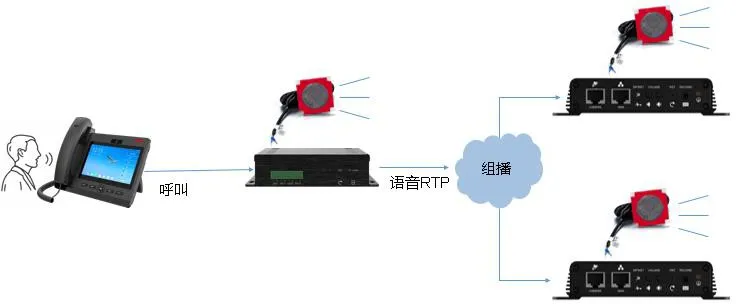
A normal call occurs between two devices with full-duplex two-way audio. The Call to Multicast function extends this to broadcast applications. In this function, the caller is typically an IP phone, and the receiver is a broadcast device such as BK-DAB-PA3. After receiving the call and audio, the receiver plays the sound locally and forwards it to a configured multicast address. One or more multicast receivers then play the audio simultaneously.

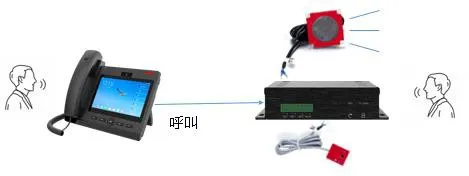
Normal Call Diagram

Figure 1 Normal Call

Call to Multicast Diagram

Figure 2 Call to Multicast

Application Scenarios

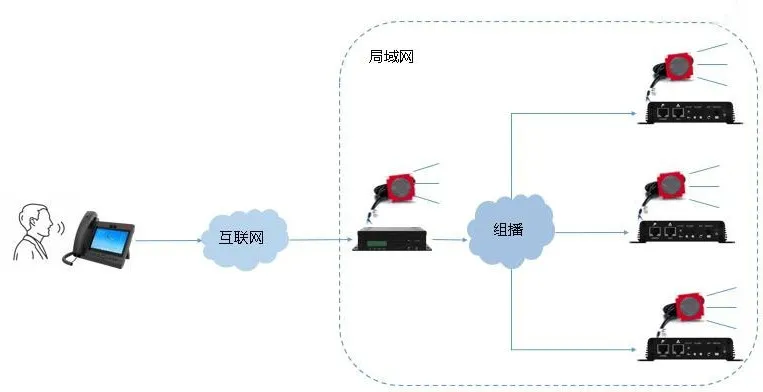
Scenario 1: Broadcast Paging
An IP phone calls a BK-DAB-PA3 broadcast device to page an entire group.

IP Phone Paging to Broadcast Device

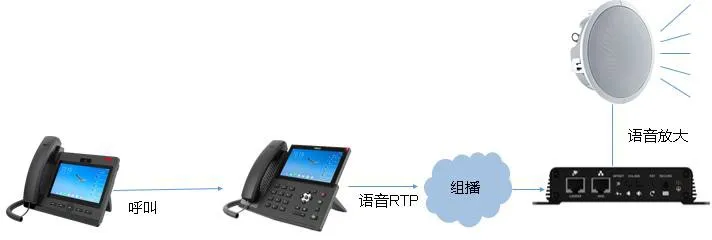
Scenario 2: Audio Amplification
IP phone amplifies received audio.
Note: Avoid howling by balancing volume and distance between sender and receiver.

IP Phone Audio Amplification

Prerequisites

  1. Prepare 2+ broadcast devices connected to a PoE switch with valid network IPs.

  2. Prepare a configuration PC on the same LAN, able to access the devices.

Wiring Diagram

Connect IP phones and PA broadcast devices to the PoE switch as shown below.

Device Connection Diagram

Operation Guide

Before using Call to Multicast, you must configure the devices. This document uses F600S (caller), PA3 (multicast sender), PA2 / PA2S (multicast receivers) as examples. Configuration includes: 1. PA3 Multicast Sender Configuration 2. PA2 / PA2S Multicast Receiver Configuration 3. F600S ↔ PA3 call configuration (refer to other FAQs)

PA3 Multicast Sender Configuration

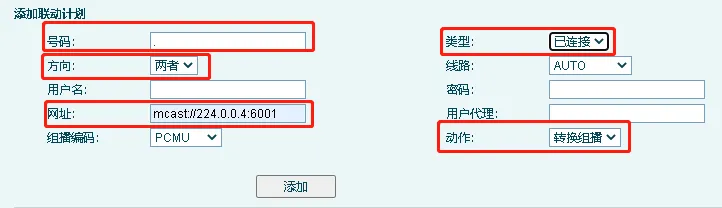
The sender uses the Action Plan feature. It matches the calling number and direction, then executes the multicast action.

PA3 Multicast Sender Configuration

Fields:
- Number: Matches caller ID. Use "." for any number, e.g., "71." matches 71xx. IP prefix like "172.18.8." is also supported.
Note: "." is a dot wildcard.
- Type: Select Connected (start multicast after call answered).
- Direction: Both, Incoming, or Outgoing.
- URL: Multicast address in format: mcast://ip:port
 IP range: 224.0.0.0 – 239.255.255.255
 Port: 1–65535 (recommend ≥1000)
- Action: Select Convert to Multicast.

Multicast Receiver Configuration

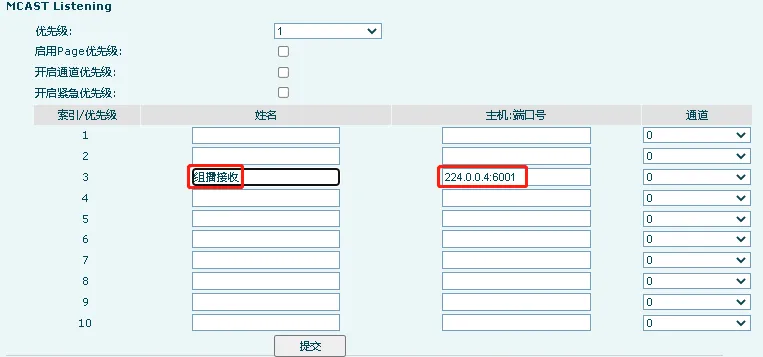
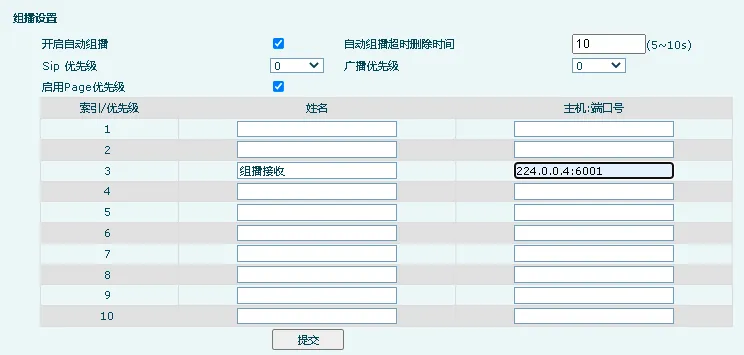
Log into the PA2 / PA2S web interface. Go to Settings → Multicast. Enter the same multicast IP and port as the sender.

PA2S Multicast Receiver

Figure 1 PA2S Multicast Receiver

PA2 Multicast Receiver

Figure 2 PA2 Multicast Receiver

Fields:
- Index/Priority: Lower number = higher priority (1 = highest). Higher priority can interrupt lower ones.
- Name: Custom name.
- Host:Port: Must match sender exactly.
- Channel: Leave at 0 (only for Polycom compatibility).

Troubleshooting: Call to Multicast Not Working

If the function fails after configuration, check these steps:

  1. Ensure sender and receivers are on the same LAN. Multicast must NOT be blocked by switches, routers, or VLANs.

  2. Verify the sender’s Number rule matches the caller’s number. If no match, multicast will not start.

Catálogo
¡Fabricante profesional de comunicaciones industriales, que proporciona una garantía de comunicación de alta confiabilidad!
Consulta de cooperación
Servicio al cliente Teléfono
We use cookie to improve your online experience. By continuing to browse this website, you agree to our use of cookie.

Cookies

This Cookie Policy explains how we use cookies and similar technologies when you access or use our website and related services. Please read this Policy together with our Terms and Conditions and Privacy Policy so that you understand how we collect, use, and protect information.

By continuing to access or use our Services, you acknowledge that cookies and similar technologies may be used as described in this Policy, subject to applicable law and your available choices.

Updates to This Cookie Policy

We may revise this Cookie Policy from time to time to reflect changes in legal requirements, technology, or our business practices. When we make updates, the revised version will be posted on this page and will become effective from the date of publication unless otherwise required by law.

Where required, we will provide additional notice or request your consent before applying material changes that affect your rights or choices.

What Are Cookies?

Cookies are small text files placed on your device when you visit a website or interact with certain online content. They help websites recognize your browser or device, remember your preferences, support essential functionality, and improve the overall user experience.

In this Cookie Policy, the term “cookies” also includes similar technologies such as pixels, tags, web beacons, and other tracking tools that perform comparable functions.

Why We Use Cookies

We use cookies to help our website function properly, remember user preferences, enhance website performance, understand how visitors interact with our pages, and support security, analytics, and marketing activities where permitted by law.

We use cookies to keep our website functional, secure, efficient, and more relevant to your browsing experience.

Categories of Cookies We Use

Strictly Necessary Cookies

These cookies are essential for the operation of the website and cannot be disabled in our systems where they are required to provide the service you request. They are typically set in response to actions such as setting privacy preferences, signing in, or submitting forms.

Without these cookies, certain parts of the website may not function correctly.

Functional Cookies

Functional cookies enable enhanced features and personalization, such as remembering your preferences, language settings, or previously selected options. These cookies may be set by us or by third-party providers whose services are integrated into our website.

If you disable these cookies, some services or features may not work as intended.

Performance and Analytics Cookies

These cookies help us understand how visitors use our website by collecting information such as traffic sources, page visits, navigation behavior, and general interaction patterns. In many cases, this information is aggregated and does not directly identify individual users.

We use this information to improve website performance, usability, and content relevance.

Targeting and Advertising Cookies

These cookies may be placed by our advertising or marketing partners to help deliver more relevant ads and measure the effectiveness of campaigns. They may use information about your browsing activity across different websites and services to build a profile of your interests.

These cookies generally do not store directly identifying personal information, but they may identify your browser or device.

First-Party and Third-Party Cookies

Some cookies are set directly by our website and are referred to as first-party cookies. Other cookies are set by third-party services, such as analytics providers, embedded content providers, or advertising partners, and are referred to as third-party cookies.

Third-party providers may use their own cookies in accordance with their own privacy and cookie policies.

Information Collected Through Cookies

Depending on the type of cookie used, the information collected may include browser type, device type, IP address, referring website, pages viewed, time spent on pages, clickstream behavior, and general usage patterns.

This information helps us maintain the website, improve performance, enhance security, and provide a better user experience.

Your Cookie Choices

You can control or disable cookies through your browser settings and, where available, through our cookie consent or preference management tools. Depending on your location, you may also have the right to accept or reject certain categories of cookies, especially those used for analytics, personalization, or advertising purposes.

Please note that blocking or deleting certain cookies may affect the availability, functionality, or performance of some parts of the website.

Restricting cookies may limit certain features and reduce the quality of your experience on the website.

Cookies in Mobile Applications

Where our mobile applications use cookie-like technologies, they are generally limited to those required for core functionality, security, and service delivery. Disabling these essential technologies may affect the normal operation of the application.

We do not use essential mobile application cookies to store unnecessary personal information.

How to Manage Cookies

Most web browsers allow you to manage cookies through browser settings. You can usually choose to block, delete, or receive alerts before cookies are stored. Because browser controls vary, please refer to your browser provider’s support documentation for details on how to manage cookie settings.

Contact Us

If you have any questions about this Cookie Policy or our use of cookies and similar technologies, please contact us at support@becke.cc .